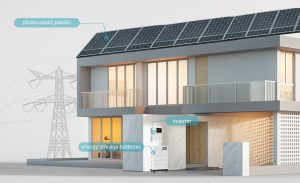

Key points
- Well-oriented solar panels in Adelaide produce about 4.2 kWh per kW installed per day on average, so a 6.6kW system makes roughly 27 kWh a day.
- Adelaide is in STC Zone 3. In 2026 the federal discount is worth about $1,800 on a 6.6kW system, and it shrinks every January until 2030.
- South Australia has no state solar or battery rebate, but the federal battery discount drops from 6.8 to 5.7 STCs per kWh on 1 January 2027.
- Feed-in tariffs are low (about 0–8c/kWh), so the savings come from using your own power, adding a battery or using the Solar Sharer free midday window.
- Every system connects to SA Power Networks, which sets your export limit (fixed 1.5 kW per phase or flexible up to 10 kW per phase) and requires Smarter Homes compliance.
Solar panels in Adelaide are still one of the best-value home upgrades in Australia. The city gets more usable sun than Melbourne or Sydney, a typical 6.6kW system costs roughly $4,500–$8,000 after the federal discount, and South Australia’s high power prices mean every kilowatt-hour you use yourself is worth far more than one you export. This guide covers what solar produces in Adelaide, what it costs in 2026, the SA-specific rules and tariffs, batteries, commercial systems and how to choose an installer.
It is written for Adelaide homeowners and business owners who want local facts, not a sales pitch. Where a number changes often, we give a range and a date so you can check it against the official source.
Are solar panels in Adelaide worth it in 2026?
For most owner-occupied homes, yes. South Australia already runs on rooftop solar more than any other state. Around 57% of SA homes have solar, more than 72,000 have a home battery, and at one point on 31 August 2026 rooftop solar supplied 99.9% of the state’s electricity demand.
That success has changed how solar pays off. Feed-in tariffs (what your retailer pays for exported power) have fallen to a few cents, while power bought from the grid still costs many times that amount. The value of solar in Adelaide now comes from three things:
- Self-consumption. Running air conditioning, hot water, the pool pump, the dishwasher and EV charging during the day.
- Storage. Shifting surplus midday solar into the evening with a battery.
- Smart tariffs. Picking a plan that rewards midday use, such as the Solar Sharer offer.
Households that are home during the day, run reverse-cycle air conditioning, or plan to go all-electric usually see the fastest payback. Our guide to solar savings, feed-in tariffs and power bills explains how to work out your own numbers.
How much power do solar panels produce in Adelaide?
The Clean Energy Council’s guideline figure for Adelaide is about 4.2 kWh per kW of panels per day, averaged over a year. Well-designed, north-facing systems often do slightly better (around 4.2–4.4 kWh/kW/day). Output is much higher in summer and lower in June and July, so don’t judge your system on a single winter week.
| System size | Average per day (Adelaide) | Approx. per year | Typical household fit |
|---|---|---|---|
| 6.6kW | about 27–28 kWh | about 10,000 kWh | 2–4 people, gas or heat pump hot water |
| 10kW | about 42 kWh | about 15,000 kWh | Larger families, ducted air con, pool |
| 13kW | about 55 kWh | about 20,000 kWh | All-electric homes, EV, battery charging |
Based on 4.2 kWh/kW/day. Real output depends on roof direction, tilt, shading, panel temperature and inverter size.
Roof direction matters less than it used to. North gives the most energy across the year, but east–west layouts spread generation across the morning and late afternoon, which suits the way many Adelaide families use power. Shade from trees or a neighbour’s second storey has a bigger effect than orientation. For a deeper look, read how much power a 6.6kW system produces in Adelaide and Melbourne.
How much do solar panels cost in Adelaide in 2026?
Typical 2026 market prices for good-quality residential systems, after the federal STC discount and including GST, look like this:
| System | Typical 2026 market price (after STCs) | Notes |
|---|---|---|
| 6.6kW | $4,500–$8,000 | The most common size in Adelaide |
| 10kW | $8,000–$12,000 | Often needs three-phase power for full export |
| 13kW and above | above the 10kW range (15kW+ systems from about $12,000) | Usually three-phase, often paired with a battery |
The spread comes from panel and inverter brand, roof type (tile, Colorbond, flat or steep), switchboard upgrades, the number of storeys and whether you want microinverters or optimisers. Prices are indicative only. Our full breakdown is in how much solar panels cost in Adelaide in 2026, and how to compare solar quotes shows what to check line by line.
How the STC discount works in Adelaide (Zone 3)
The federal “solar rebate” is really a certificate scheme. Your system creates small-scale technology certificates (STCs), and the installer usually takes their value off your quote. The formula is:
System size (kW) × zone rating × deeming years = number of STCs
Adelaide is in Zone 3, with a rating of 1.382 MWh per kW. Systems installed in 2026 get 5 deeming years. So for a 6.6kW system:
- 6.6 × 1.382 × 5 = 45.6, rounded down to 45 STCs.
- At about $39.85 per STC (early October 2026 spot price), that’s roughly $1,790 off the price.
- Install in 2027 instead and the deeming period drops to 4 years: 36 STCs, or about $1,435. Waiting costs you around $350 on the same system, before any price changes.
| System | STCs in Adelaide (2026) | Approx. discount at $39.85 |
|---|---|---|
| 6.6kW | 45 | about $1,790 |
| 10kW | 69 | about $2,750 |
| 13kW | 89 | about $3,550 |
The STC price moves, and some installers apply a slightly lower rate to cover their risk and fees, so treat these as estimates. STCs explained walks through the maths in more detail.
What size solar system suits an Adelaide home?
Start with your bills. Look for your average daily usage in kWh and when you use it. As a rough guide:
- 6.6kW solar system: suits smaller households using up to about 15–20 kWh a day, especially on single-phase power.
- 10kW solar system: suits families with ducted air conditioning, a pool or plans for a battery.
- 13kW solar system: suits all-electric homes, EV owners and anyone who wants plenty of surplus to charge a large battery.
Because exports earn so little in SA, the old advice to “fill the roof” now comes with a caveat: size for what you can use or store. A bigger system still makes sense if you are adding a battery, switching to a heat pump or buying an EV within a few years. Our guide what size solar system do I need compares the three sizes, and all our home packages are on the residential solar page.
SA Power Networks: connection, export limits and Smarter Homes
Every home in metropolitan Adelaide is on the SA Power Networks (SAPN) distribution network. Your installer applies to SAPN before installation, and SAPN sets how much your system may export.
Fixed or flexible exports?
- Fixed exports: up to 1.5 kW per phase at all times, or 0 kW in some constrained areas.
- Flexible Exports: up to 10 kW per phase most of the time, turned down only when the local network is overloaded (usually mild, sunny spring days). This needs a compatible inverter with a permanent internet connection.
SAPN has an online eligibility checker where you can enter your address. For most new systems, flexible exports are the better choice. See SA Power Networks flexible exports, Smarter Homes and the solar backstop for the full explanation.
Two-way tariffs
Since 1 July 2025, SAPN’s two-way network tariff can charge about 1c/kWh for exports between 10am and 4pm above a free allowance of roughly 9 kWh a day, for inverters up to 30 kW. Whether you actually see this on your bill depends on how your retailer structures its plan. It’s another reason to use or store midday solar rather than export it.
Smarter Homes and the solar backstop
Under the South Australian Government’s Smarter Homes rules, new and upgraded solar systems must be capable of remote disconnection and reconnection, and owners must appoint a “Relevant Agent” to do this if the state’s power system is in an emergency. Your installer sets this up. It is rarely used, but it is a legal requirement, so check your quote covers it.
South Australian rebates, tariffs and rules in 2026
South Australia does not currently offer a state rebate for solar panels or batteries. The SA Home Battery Scheme closed in 2022. What you can still access comes mainly from federal schemes and from choosing the right electricity plan.
| Scheme or rule | What it means for Adelaide (as of October 2026) |
|---|---|
| Federal STCs (solar) | About $1,790 off a 6.6kW system in 2026; falls each year to 2030 |
| Cheaper Home Batteries Program | 6.8 STCs per usable kWh until 31 Dec 2026, then 5.7 from 1 Jan 2027 |
| State solar or battery rebate | None |
| REPS VPP incentive | General funding ran out in May 2026; priority groups only for the rest of 2026 |
| Feed-in tariffs | No minimum; retailer offers roughly 0–8c/kWh, often capped per day |
| Legacy 44c feed-in scheme | Ends 30 June 2028 |
| Solar Sharer (from 1 July 2026) | Free grid power 12pm–3pm, up to 24 kWh a day, opt-in, smart meter needed |
| Default Market Offer 2026–27 | Residential flat rate up about 1.4% |
The Retailer Energy Productivity Scheme (REPS) is a state scheme that requires retailers to fund energy-saving activities. Its virtual power plant (VPP) incentive helped many SA households join a VPP, but general funding ran out in May 2026. Read solar rebates in South Australia 2026 for everything still on offer, and our complete guide to solar and battery rebates in SA and Victoria for the national picture.
Feed-in tariffs and the Solar Sharer offer
With exports paying so little, the plan you choose matters as much as the hardware. The Solar Sharer offer, available in SA since 1 July 2026, gives households with a smart meter free grid power from 12pm to 3pm (up to 24 kWh a day). You don’t need solar to use it, and rates outside the free window are usually higher, so it suits homes that can shift loads to midday. Some solar households do better on a solar-focused plan instead. Compare the options in SA feed-in tariffs in 2026 and Solar Sharer vs Midday Power Saver.
Solar batteries in Adelaide
Adelaide is one of the best places in Australia for a home battery: lots of surplus midday solar, low feed-in tariffs and high evening prices. The federal Cheaper Home Batteries Program takes a large chunk off the price, and it is most generous until 31 December 2026.
Worked example: 13.5 kWh battery
- Installed by 31 December 2026: 13.5 × 6.8 = about 91 STCs, worth roughly $3,400–$3,600 at $37–$40 per STC.
- Installed from 1 January 2027: 13.5 × 5.7 = about 76 STCs, roughly $2,800–$3,000.
Before the discount, typical 2026 battery prices run at roughly $700–$1,300 per usable kWh, with wide variation by brand and whether a new inverter is needed. The discount tapers on larger batteries (100% for the first 14 kWh, 60% from 14–28 kWh, 15% from 28–50 kWh), so very large batteries get less help per kWh.
To qualify, the battery must be on the approved list, be VPP-capable and be installed by an SAA-accredited installer. You don’t have to join a VPP. A battery with backup can also keep essential circuits running in a blackout, which matters in parts of Adelaide that lose power during summer storms and heatwaves.
Read more: Cheaper Home Batteries Program in SA, choosing a home battery and installer in Adelaide, solar battery cost in 2026 and virtual power plants in SA and Victoria. Our complete guide to home solar batteries covers sizing, brands and lifespan, and you can see the systems we install on our solar battery system installation page.
Commercial solar for Adelaide businesses
Businesses use most of their power during daylight hours, so commercial solar in Adelaide often pays back faster than residential. Typical 2026 market prices for commercial systems are roughly $0.70–$1.20 per watt after STCs, with larger systems at the lower end. Common sizes:
- 20kW commercial solar system: cafés, small offices, medical practices.
- 30kW commercial solar system: workshops, retail, small manufacturers.
- 50kW commercial solar system: warehouses, cold rooms, larger clinics.
- 99kW commercial solar system: factories, wineries, schools and big daytime users.
Three changes make 2026 a good year to look at it:
- STCs now cover systems up to 1 MW. From 1 October 2026, systems between 100 kW and 1 MW can claim STCs with a fixed 5-year deeming period. The government estimates this is worth about $68,000 off a 250 kW system.
- The $20,000 instant asset write-off is permanent for small businesses with turnover under $10 million. Most commercial systems cost more than $20,000, so they usually go into the small business pool instead. Ask your accountant.
- Batteries for demand charges. Many SA business tariffs include demand charges based on your peak usage. A battery can trim those peaks.
Read more: commercial solar and batteries for Adelaide businesses, solar for farms and wineries in South Australia, commercial solar costs in 2026 and our commercial solar guide for Australian businesses. Our business packages are listed on the commercial solar page.
Going all-electric with solar in Adelaide
Solar works best when it powers the big loads in your home. In Adelaide that usually means a heat pump hot water system, reverse-cycle air conditioning and, increasingly, an EV. A heat pump on a timer moves your hot water heating into the middle of the day, using solar that would otherwise be exported for a few cents. Our home electrification guide and heat pump hot water with solar explain the costs and savings.
Solar maintenance and repairs in Adelaide
Solar panels have no moving parts, but Adelaide conditions do take a toll. Dry summers mean dust and bird droppings build up between rains, pigeons like to nest under panels, and very hot days reduce panel efficiency slightly. Inverters are usually the first component to need replacing, often after 10–15 years.
- Check your monitoring app monthly and compare against the same month last year.
- Rinse panels with a hose from the ground if they’re visibly dirty; never climb the roof.
- Book a professional check every few years, or sooner if output drops or the inverter shows an error.
Our solar panel maintenance, repairs and performance guide covers cleaning, fault-finding and when an upgrade makes more sense than a repair.
Choosing a solar installer in Adelaide
The installer matters more than the panel brand. Before you sign, check that:
- The installer is accredited by Solar Accreditation Australia (SAA). This is required for STCs and the battery discount.
- All panels, inverters and batteries are on the Clean Energy Council approved products lists.
- The quote names exact brands and models, the STC discount, SAPN application, Smarter Homes setup and any switchboard work.
- The battery install meets AS/NZS 5139:2019, and the inverter meets AS/NZS 4777.2:2020.
- Warranties (product, performance and workmanship) are written down, with a local contact for service.
The Clean Energy Regulator’s 2026 inspections found that around 60% of inspected battery installs had at least one non-compliance (mostly labelling), so it pays to choose carefully. Our home solar panels buying guide covers panel technology, inverters and quotes in more depth.
How Solar Beat works in Adelaide
Solar Beat’s Adelaide office is at 64A Graves St, Newton SA 5074, in the eastern suburbs, and our team installs across Adelaide. We have been working in solar for more than seven years, our installers are SAA-accredited, and we only install CEC-approved equipment from brands including Tesla, Sungrow, AlphaESS, Sigenergy, JA Solar, GoodWe, Sofar, Enphase, SolaX, Fronius, Jinko, NeoVolt, Solis, Growatt, Seraphim and Trina.
We offer 6.6kW, 10kW and 13kW home packages, 20kW to 99kW commercial packages and home and business batteries, plus servicing, repairs and panel replacements. We can also help you access the federal discounts and interest-free finance. We also have a Melbourne team; see our Melbourne solar guide. You can read more about Solar Beat, or browse all our solar guides.
Frequently asked questions
How much do solar panels cost in Adelaide in 2026?
Typical 2026 market prices are about $4,500–$8,000 for a 6.6kW system and $8,000–$12,000 for a 10kW system, after the federal STC discount and including GST. Larger 13kW systems cost more again. The final price depends on panel and inverter brand, roof type, switchboard work and whether you add a battery, so compare itemised quotes.
Is there a solar rebate in South Australia?
There is no state rebate for solar panels or batteries in South Australia in 2026. You can still get the federal STC discount on solar (about $1,790 on a 6.6kW system in Adelaide) and the federal Cheaper Home Batteries discount on an eligible battery. Both are usually taken off your quote by the installer.
How much power does a 6.6kW solar system produce in Adelaide?
About 27–28 kWh a day on average across the year, or roughly 10,000 kWh a year, based on the Clean Energy Council guideline of 4.2 kWh per kW per day. Summer days produce much more and winter days much less. Shade, roof direction and inverter size all affect the result.
Do I need SA Power Networks approval to install solar?
Yes. Your installer applies to SA Power Networks before installation. SAPN decides your export limit, either a fixed 1.5 kW per phase (or 0 kW in some areas) or flexible exports of up to 10 kW per phase with an internet-connected inverter. Your system must also meet the state’s Smarter Homes remote disconnection rules.
Should I add a battery before 1 January 2027?
If you were already planning a battery, installing by 31 December 2026 locks in 6.8 STCs per usable kWh. From 1 January 2027 the rate drops to 5.7. On a 13.5 kWh battery that difference is worth roughly $550–$600. Don’t rush into a poor-quality install to beat the date, though.
What size solar system do I need for my Adelaide home?
Most Adelaide homes choose between 6.6kW, 10kW and 13kW. A 6.6kW system suits smaller households, 10kW suits families with ducted air conditioning or a pool, and 13kW suits all-electric homes, EV owners and battery owners. Check your daily kWh usage on your bills and size for what you can use or store.
Solar guides for Adelaide homeowners
- How Much Do Solar Panels Cost in Adelaide in 2026? – price ranges by system size and what drives them.
- Solar Rebates in South Australia 2026 – every federal and state incentive still available in SA.
- Cheaper Home Batteries Program in SA – what you’ll get before the 1 January 2027 cut.
- Choosing a Home Battery and Installer in Adelaide – brands, sizing and installer checks.
- SA Feed-in Tariffs in 2026 – why batteries and Solar Sharer now beat exporting.
- SA Power Networks Flexible Exports, Smarter Homes and the Solar Backstop – export limits and grid rules explained.
- Solar Sharer vs Midday Power Saver – are free midday power plans worth it?
- How Much Power Does a 6.6kW Solar System Produce? – daily and seasonal output in Adelaide.
- What Size Solar System Do I Need? – 6.6kW vs 10kW vs 13kW compared.
- STCs Explained – how the federal solar rebate is calculated.
- How Much Does a Solar Battery Cost in 2026? – prices after the federal discount.
- Virtual Power Plants in SA and Victoria – should you join a VPP?
- Commercial Solar and Batteries for Adelaide Businesses – costs, tax and payback for SA businesses.
- Solar for Farms and Wineries in South Australia – pumps, sheds and payback.
- How to Compare Solar Quotes – 12 things to check before you sign.
Ready to see what solar or a battery would save at your place? Talk to our Adelaide team for a free, no-obligation solar quote. We’ll look at your bills, your roof and your SAPN export options before recommending a system.
Sources: Clean Energy Regulator – Small-scale technology certificates (accessed October 2026); SA Power Networks – Your solar: fixed and flexible exports (accessed October 2026); SA Department for Energy and Mining – Smarter Homes information for customers; Australian Energy Regulator – Default Market Offer prices 2026–27 (May 2026); SolarQuotes – Average daily solar output by city (Clean Energy Council figures); Energy Matters – How much do solar panels cost in Australia? (February 2026); Why Solar – Commercial solar cost in Australia (February 2026). Prices, STC values, tariffs and program rules change often; figures are indicative as of October 2026, so check the official sources before you buy. Featured image: Orderinchaos / Wikimedia Commons, CC BY-SA 3.0.