
Key points
- A home battery stores your spare solar during the day so you can use it in the evening instead of buying power at peak rates.
- Typical 2026 installed prices are about $700–$1,300 per usable kWh before the federal discount, which is worth about $2,500–$2,700 on a 10 kWh battery until 31 December 2026.
- The discount rate falls from 6.8 to 5.7 STCs per kWh on 1 January 2027, and keeps falling every six months to 2030.
- Paybacks are typically shorter in Adelaide than in Melbourne, because SA evening prices are higher.
- Size the battery to your evening and overnight use, decide early whether you want blackout backup, and check the model is on the approved list.
This solar battery guide brings together everything South Australian and Victorian households need to know before buying a home battery in 2026. It covers what batteries cost, how the federal Cheaper Home Batteries discount works, whether a battery pays for itself, what size you need, how backup and virtual power plants work, how the main brands compare and how long batteries last. Each section gives you the short answer and links to a detailed guide.
Batteries have gone mainstream fast. More than 500,000 batteries had been installed under the federal program by August 2026, and the Clean Energy Council counted 276,011 installed in the first half of 2026 alone. South Australia leads the way, with more than 72,000 homes now running a battery. With so many quotes on offer, a clear understanding of the basics is the best protection you have.
What does a home solar battery do?
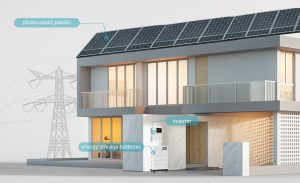
Your solar panels produce most of their power in the middle of the day, when many homes use the least. Without a battery, that surplus goes to the grid for a small feed-in tariff, typically 0–8c/kWh in SA and Victoria in 2026, and you buy power back in the evening at much higher prices. A battery stores the surplus and runs your home after the sun goes down.
Almost all home batteries sold in Australia now use lithium iron phosphate (LFP) cells, valued for thermal stability and long cycle life. They come in three main set-ups:
- All-in-one batteries with a built-in inverter, such as the Tesla Powerwall 3 or SigenStor.
- Modular batteries paired with a hybrid inverter, such as Sungrow SBR batteries with a Sungrow hybrid inverter, or GoodWe Lynx batteries with a GoodWe hybrid.
- AC-coupled batteries that sit alongside an existing solar inverter.
Two numbers matter most on any quote: usable capacity in kWh (how much energy it stores and delivers) and continuous power in kW (how much it can run at once).
Solar battery guide at a glance
| Question | Short answer (October 2026) | Detailed guide |
|---|---|---|
| What does a battery cost? | About $700–$1,300 per usable kWh before the discount; many 10–16 kWh systems around $10,000 installed after it | Battery cost 2026 |
| How big is the discount? | 6.8 STCs per usable kWh until 31 Dec 2026, tapering above 14 kWh | SA discount guide |
| Is it worth it? | Often 6–8 year payback in Adelaide; often 11–16 years in Melbourne | Savings and payback |
| What size? | Match your 4pm–7am use; commonly 10–20 kWh | Sizing guide |
| Works in a blackout? | Only if installed with backup circuits or a gateway | Backup explained |
| How long does it last? | Typically warranted 10 years to 70% capacity | Lifespan and warranties |
How much does a solar battery cost in 2026?
As a rule of thumb, typical 2026 market prices are about $700–$1,300 per usable kWh installed, before the federal discount. Smaller batteries sit at the top of that range, because the inverter, labour and compliance costs are spread over fewer kWh. SolarQuotes’ May 2026 examples show batteries of around 15–16 kWh at about $9,800–$10,000 installed after the discount, a 10 kWh battery at about $10,800, and a 25.6 kWh battery at about $14,000.
Extras can add thousands: a replacement hybrid inverter if yours isn’t compatible (about $3,000 or more), three-phase equipment, long cable runs, switchboard upgrades and whole-home backup. Always compare quotes on price per usable kWh after the discount, with the same inclusions.
Read more: How much does a solar battery cost in 2026?
The federal battery discount and state support
Since 1 July 2025, the federal Cheaper Home Batteries Program has given batteries small-scale technology certificates (STCs) based on usable capacity. Your installer takes their value off your invoice. The rate depends on your install date:
| Installation date | STCs per usable kWh |
|---|---|
| 1 May – 31 Dec 2026 | 6.8 |
| Jan – Jun 2027 | 5.7 |
| Jul – Dec 2027 | 5.2 |
| 2028 | 4.6, then 4.1 |
| 2029 | 3.6, then 3.1 |
| 2030 | 2.6, then 2.1 |
Larger batteries earn less per kWh: 100% of the rate for the first 14 kWh, 60% from 14 to 28 kWh, 15% from 28 to 50 kWh, and nothing above 50 kWh. At about $37–$40 per STC, the discount is roughly $2,500–$2,700 for 10 kWh, $3,400–$3,700 for 13.5 kWh and about $4,400 for 20 kWh. To qualify, the battery must be 5–100 kWh, on the approved list, VPP-capable and installed by an SAA-accredited installer. You don’t have to join a VPP.
South Australia has no state battery rebate. The REPS VPP incentive is limited to priority households for the rest of 2026. Victoria has no state battery rebate for owner-occupiers, though the Solar Homes panel rebate (up to $1,400) can help if you add new solar at the same time.
Read more: Cheaper Home Batteries Program in SA and Battery rebates in Victoria 2026. For every solar, battery and electrification incentive in one place, see our guide to solar and battery rebates in SA and Victoria.
Is a solar battery worth it?
A battery saves you the difference between the price you’d pay for evening power and the feed-in tariff you give up by storing your solar. With round-trip losses of about 10%, every kWh you store is worth roughly the evening rate minus a few cents.
SolarQuotes modelling from January 2026 put a 10 kWh battery with 7 kWh of overnight use at about $1,350 a year in savings in Adelaide (about a 7-year payback) but about $610 in Melbourne (about 15.6 years). Victoria’s lower overnight off-peak rates are the main reason for the gap. Higher evening use, an EV, a VPP or a free-midday plan can all shorten payback. If you’re still on SA’s legacy 44c feed-in tariff, adding a battery ends it, so most of those homes are better waiting until the scheme finishes on 30 June 2028.
Read more: Is a solar battery worth it in 2026?
What size solar battery do you need?
Size your battery to your evening and overnight usage, roughly 4pm to 7am, not your total daily use. Divide that number by about 0.9 to allow for losses, then add capacity for any backup reserve you want to keep. Then check your solar system produces enough surplus to fill it: a 6.6 kW system averages roughly 28 kWh a day in Adelaide and 24–25 kWh in Melbourne, much less in winter.
The tapering discount also shapes the best size. Each kWh in the first 14 kWh earns about $250–$270 off in 2026, the next 14 kWh about $150–$165 each, and beyond 28 kWh only about $40 each. The national average new battery fell from 44 kWh in April 2026 to 22.6 kWh in July, according to SunWiz.
Read more: What size solar battery do I need?
Adding a battery to existing solar, or starting fresh
You can add a battery to most existing solar systems and still claim the federal discount. Your existing panels don’t need to be on the approved list, but the inverter the battery connects to must be VPP-capable and approved, or it must be replaced.
There are two main approaches. An AC-coupled battery keeps your existing inverter and connects at the switchboard. It loses roughly 10% more of the solar you store, but is often the simplest retrofit. Replacing your inverter with a hybrid (DC-coupled) one is more efficient and makes sense if your inverter is old or you’re adding panels. If you’re starting from scratch, installing solar and a battery together on one hybrid inverter usually saves around $1,000 compared with retrofitting later. Our home solar packages can be quoted with or without a battery.
Read more: Adding a battery to existing solar: AC vs DC coupling
Will a solar battery keep the lights on in a blackout?
Only if it’s installed for backup. Grid-connected solar shuts down in an outage to protect line workers, even on a sunny day. A battery can keep power on only when the system can safely disconnect your home from the grid, using a backup circuit on a hybrid inverter or a gateway at the switchboard.
Most homes back up essential circuits: the fridge, lights, internet and a few power points. Whole-home backup is more convenient but costs more, and large loads like ducted air conditioning may still exceed the inverter’s output. Switchover times range from under 10 milliseconds on some systems (manufacturer figures) to a few minutes on others. Not every system lets solar recharge the battery during an outage, so ask.
Read more: Will a solar battery work in a blackout?
Virtual power plants: should you join one?
A virtual power plant (VPP) links home batteries so a retailer can use part of their stored energy when the grid is under pressure. In return you get credits. Typical 2026 offers in SA and Victoria include a $200 sign-up credit plus either $1/kWh during events (capped at 200–250 kWh a year) or a fixed monthly or quarterly credit. Most keep a 20% reserve in your battery.
For most homes a VPP is worth a few hundred dollars a year: a useful bonus, not the main reason to buy. Before joining, compare the plan’s full rates, check exit fees and confirm VPP use doesn’t affect your battery warranty.
Read more: Virtual power plants in SA and Victoria
Choosing a battery brand and installer
The brands most installed in SA and Victoria include Sigenergy, Tesla, Sungrow, GoodWe and AlphaESS. Sigenergy held about 25% of the market in 2025, according to SunWiz. Most offer LFP batteries with 10-year warranties guaranteeing 70% of capacity, but the details differ: some cap the warranty by total energy throughput (MWh), and backup set-ups vary from built-in bypasses to separate gateways.
The installer matters as much as the brand. Installers must be accredited by Solar Accreditation Australia (SAA), and batteries must be installed to AS/NZS 5139:2019 (Amendment 1, December 2025). In 2026 the Clean Energy Regulator reported that around 60% of inspected battery installations had at least one non-compliance, mostly labelling, with about 1% unsafe.
Read more: Home battery brands compared 2026 and Choosing a home battery and installer in Adelaide.
How long do solar batteries last?
Most home batteries are warranted for 10 years, usually to 70% of original capacity, and many should keep working beyond that with less capacity. Watch for throughput caps: a cap equal to about 2,800 full cycles could be reached before 10 years if the battery fully cycles every day. In independent testing at the Canberra Battery Test Centre, a Tesla Powerwall 2 kept about 79% of its capacity after the equivalent of 6.9 years of daily cycling. Heat and heavy cycling are the main things that shorten life, so location and sizing matter.
Read more: How long do solar batteries last?
Batteries in South Australia vs Victoria
| South Australia | Victoria | |
|---|---|---|
| State battery rebate | None; REPS VPP incentive for priority households in 2026 | None for owner-occupiers |
| Feed-in tariffs | No minimum; retailer FiTs ~0–8c; legacy 44c scheme ends 30 June 2028 | No minimum since 1 July 2025 |
| Free midday power option | Solar Sharer: 12pm–3pm, up to 24 kWh/day (from 1 July 2026) | Midday Power Saver: 11am–2pm, up to 24 kWh/day (from 1 October 2026) |
| Network rules | SA Power Networks approval; flexible exports; Relevant Agent for new solar | Distributor pre-approval; emergency backstop for new and upgraded solar |
| Typical payback | Shorter, thanks to high evening prices | Longer; depends heavily on evening use |
Free midday plans can make a battery more valuable, because it can top up from the grid for free when your panels can’t fill it. But they often charge more outside the free window, so compare the whole plan. Our guide to feed-in tariffs, solar savings and power bills explains the tariff side in detail. For local installation advice, see our guides to solar and batteries in Adelaide and solar and batteries in Melbourne.
Batteries for businesses
Small businesses can also claim the federal battery discount. For a business, the value of a battery often comes from cutting demand charges and peak-time usage rather than storing solar for the evening. If you run a business in SA or Victoria, start with our commercial solar guide or see our commercial solar packages.
Frequently asked questions
Do I need solar panels to get a home battery?
Not strictly. The federal discount covers batteries with new or existing solar, and batteries can also charge from the grid on cheap or free midday plans. But for most homes, the main savings come from storing their own spare solar. Without solar, savings depend entirely on the gap between cheap and expensive grid rates on your plan.
When is the best time to buy a solar battery?
Financially, before 1 January 2027 if you’re ready, because the federal discount drops from 6.8 to 5.7 STCs per kWh then. That’s about $400 less on a 10 kWh battery. The exception is SA homes on the legacy 44c feed-in tariff, which usually do better waiting until that scheme ends on 30 June 2028.
How much can a home battery save me each year?
It depends on your evening usage, tariff and location. SolarQuotes’ January 2026 modelling of a 10 kWh battery showed savings of about $1,350 a year in Adelaide and about $610 in Melbourne for a home using 7 kWh overnight. Bigger evening loads, a VPP or a free-midday plan can increase savings.
Can a battery be installed inside my house?
Usually not in living areas. The Australian battery standard AS/NZS 5139 restricts locations such as habitable rooms, ceiling and wall cavities, under stairs and escape routes. Batteries commonly go on an external wall or in a garage, subject to clearance rules and the manufacturer’s requirements. Your installer will confirm a compliant location at the site inspection.
Do I have to join a virtual power plant to get the discount?
No. The battery and its inverter must be VPP-capable to earn the federal discount, but the Clean Energy Regulator confirms you don’t have to join a VPP. You can join at installation, later or never. In SA, the separate REPS incentive does require you to join an approved VPP.
All our guides on home solar batteries
- How Much Does a Solar Battery Cost in 2026? Prices After the Federal Discount – typical prices per kWh, real examples and the extras that push quotes up.
- Is a Solar Battery Worth It in 2026? Savings and Payback Explained – savings and payback for Adelaide and Melbourne homes.
- What Size Solar Battery Do I Need? A Simple Sizing Guide – size a battery from your evening use and solar output.
- Adding a Battery to Existing Solar: AC vs DC Coupling Explained – retrofit options and the SA and VIC rules.
- Will a Solar Battery Work in a Blackout? Backup Power Explained – essential vs whole-home backup and switchover times.
- Virtual Power Plants in SA and Victoria: Should You Join a VPP? – 2026 VPP offers, payments and fine print.
- Home Battery Brands Compared 2026: Tesla, Sigenergy, Sungrow, GoodWe and More – capacity, inverters, backup and warranties side by side.
- How Long Do Solar Batteries Last? Lifespan, Cycles and Warranties – warranties, throughput caps and real-world testing.
- Cheaper Home Batteries Program in SA: What You’ll Get Before the 1 January 2027 Cut – the federal discount for South Australians.
- Battery Rebates in Victoria 2026: How the Federal Discount Works – what Victorians can claim and how.
- Choosing a Home Battery and Installer in Adelaide: 2026 Guide – accreditation, standards and questions to ask.
Ready to talk about a battery for your home? Our SAA-accredited installers in Adelaide and Melbourne design and install solar battery systems from Tesla, Sigenergy, Sungrow, AlphaESS, GoodWe and other approved brands, and can pair them with a 13kW solar system or smaller package. Get a free quote, or browse all our solar guides.
Sources: Clean Energy Regulator – Solar batteries (updated 31 Jul 2026); DCCEEW – Cheaper Home Batteries Program (updated 9 Jun 2026); Clean Energy Council – Rooftop solar and storage report, January–June 2026; SolarQuotes – Battery cost (updated 12 May 2026); SolarQuotes – Are batteries worth it? (updated 4 Jan 2026); pv magazine Australia – July home battery volumes (SunWiz data) (7 Aug 2026). Prices, discounts and offers change often; figures are indicative as of October 2026. Featured image: U.S. Department of Energy / Wikimedia Commons, Public domain.