Key points
- Neither SA nor Victoria has a minimum feed-in tariff in 2026. Retailers typically pay 0–8c/kWh for exported solar, often only on the first part of each day’s exports.
- Solar you use at home saves 17–59c/kWh, depending on your tariff and the time of day. Using your solar, not exporting it, is now where the savings are.
- New free midday power plans, Solar Sharer (SA, 12pm–3pm) and the Midday Power Saver (VIC, 11am–2pm), reward shifting use into the middle of the day.
- A 6.6kW system still pays for itself in roughly 3–4 years in Adelaide and 3–6 years in Melbourne in our worked examples.
- Export limits and flexible exports now shape system design in both states, but with low feed-in rates they matter less than most people think.
Solar feed-in tariffs and savings have changed more in the past two years than in the decade before. Feed-in rates have fallen to a few cents, minimum tariffs are gone in both South Australia and Victoria, and the cheapest time to use electricity is now the middle of the day. Solar is still one of the best investments a household can make, but the way it saves you money has flipped: the value is in the power you use, not the power you sell. This guide brings together everything you need to understand your feed-in tariff, your power bill and your solar savings in 2026, with links to our detailed guides on each topic.
How does solar save you money in 2026?
Every kilowatt-hour (kWh) your panels produce goes one of two ways. Either your home uses it on the spot, which means you don’t buy that kWh from the grid, or it flows out to the grid and earns a feed-in tariff. The gap between those two values is now huge.
| What happens to 1 kWh of solar | South Australia | Victoria |
|---|---|---|
| Exported to the grid | 0–8c | 0–8c |
| Used at midday on a time-of-use plan | about 17c saved | about 17c saved |
| Used instead of flat-rate grid power | up to about 42c saved | about 26–32c saved |
| Stored in a battery for the evening peak | up to about 56c saved | about 38–48c saved |
Grid rates are based on the 2026–27 Default Market Offer (SA) and Victorian Default Offer caps, which are the maximum standing-offer prices. Market offers are often cheaper, but the pattern holds: a kWh you use is worth 3 to 10 times a kWh you export.
That’s why the rest of this guide focuses on three questions. What are you being paid for exports? How is your grid power priced through the day? And how can you use more of your own solar?
Feed-in tariffs in South Australia and Victoria
A feed-in tariff (FiT) is the credit your retailer pays for each kWh of solar you export. Both states have moved to a fully retailer-set market.
South Australia
SA has no regulated minimum feed-in tariff. Retailer rates in 2026 range from about 0c to 8c/kWh, and the higher rates usually apply only to the first 8–14 kWh exported each day. Since 1 July 2025, SA Power Networks has charged retailers 1c/kWh for exports between 10am and 4pm above a free daily allowance of around 9 kWh, for systems with inverters up to 30 kW. Early systems on the legacy 44c scheme keep it until 30 June 2028.
The context matters: about 57% of SA homes now have rooftop solar, and on 31 August 2026 rooftop solar met 99.9% of the state’s electricity demand. Midday exports are simply worth less when everyone is exporting at once.
Read more: SA feed-in tariffs in 2026: why batteries and Solar Sharer now beat exporting.
Victoria
The Essential Services Commission stopped setting a minimum feed-in tariff from 1 July 2025, so retailers can now pay any rate, including zero. In October 2026 several large retailers paid around 8c/kWh, usually only on the first 8–10 kWh a day, and many plans paid less. The 2026–27 Victorian Default Offer cut average bills by about 5% and introduced an 11am–4pm “solar soak” period.
Read more: Victoria’s feed-in tariff in 2026: no minimum, a new solar soak and 3 free hours.
Solar feed-in tariffs and savings at a glance: SA vs Victoria
| Topic (as of October 2026) | South Australia | Victoria |
|---|---|---|
| Minimum feed-in tariff | None | None (since 1 July 2025) |
| Typical retailer feed-in rate | 0–8c/kWh, often capped daily | 0–8c/kWh, often capped daily |
| Flat-rate default offer usage cap | about 42c/kWh | about 26–32c/kWh |
| Time-of-use peak window | 6am–10am and 4pm–midnight | 4pm–9pm |
| Cheapest daytime window | Solar sponge 10am–4pm | Solar soak 11am–4pm |
| Free midday power plan | Solar Sharer, 12pm–3pm, from 1 July 2026 | Midday Power Saver, 11am–2pm, from 1 October 2026 |
| Standard export limit | 1.5 kW per phase fixed, or flexible up to 10 kW per phase | Usually 5 kW per phase; flexible exports rolling out |
| State solar rebate | None | Solar Homes rebate up to $1,400 (eligibility applies) |
| Federal STC discount, 6.6kW (2026) | about 45 STCs, roughly $1,800 | about 39 STCs, roughly $1,550 |
| Typical 6.6kW payback (our examples) | about 2.7–4 years | about 3–6 years |
Figures are indicative and change regularly. Always check your retailer’s current Energy Price Fact Sheet and the official sources listed at the end of this guide.
Free midday power: Solar Sharer and the Midday Power Saver
Two new plan types give households three hours of free electricity a day, capped at 24 kWh. Solar Sharer started on 1 July 2026 in SA (12pm–3pm), NSW and South East Queensland. Victoria’s Midday Power Saver started on 1 October 2026 (11am–2pm). Both are opt-in, need a smart meter, and must be offered by larger retailers.
The catch is that rates outside the free window are a little higher. Comparing the regulated caps, Solar Sharer’s other rates are about 2.6c/kWh above the standard SA time-of-use default offer, and the Midday Power Saver’s are about 2c/kWh above the equivalent Victorian default offer in CitiPower’s area. These plans tend to suit EV owners, homes with a battery and small solar system, and people at home during the day. Solar-only homes that are empty all day often gain little.
Read more: Solar Sharer vs Midday Power Saver: are free midday power plans worth it?
Time-of-use tariffs: when power is cheap and when it isn’t
Most homes with a smart meter in SA and Victoria are now on, or can choose, a time-of-use tariff, where the price per kWh changes through the day. Midday is cheapest because rooftop solar floods the grid. The late afternoon and evening are dearest.
- SA Power Networks: peak 6am–10am and 4pm–midnight, solar sponge 10am–4pm, off-peak midnight–6am.
- Victorian Default Offer 2026–27: peak 4pm–9pm, solar soak 11am–4pm, off-peak 9pm–11am.
For a solar home, time-of-use is a double-edged sword. Your midday solar only offsets the cheap rate, while every evening kWh you buy costs the peak rate. Our worked examples show solar-only homes with heavy evening use are often slightly better off on a flat rate, while homes with a battery usually do better on time-of-use.
Read more: Time-of-use tariffs and solar: how to shift your usage and save.
Understanding your electricity bill with solar
Your bill only records what crosses the meter: imports from the grid and exports to it. The solar you use directly never appears, which is why bills can be confusing. The key lines are the daily supply charge, usage charges split by time period, the feed-in credit and any daily export cap. Comparing exports with the same quarter last year is also a quick health check for your system.
Two practical tips. First, find your NMI (National Meter Identifier) on the bill; you need it to compare plans on Energy Made Easy (SA) or Victorian Energy Compare. Second, read the “better offer” message. Retailers must tell you regularly if a cheaper plan is available based on your past year’s usage.
Read more: How to read your electricity bill with solar: a line-by-line guide.
Using more of your own solar (self-consumption)
Self-consumption is the share of your solar that your home uses directly. Homes without a battery commonly use around 25–40% of their solar; the rest is exported for a few cents. Lifting that share is the cheapest way to increase your savings.
The biggest wins are usually:
- putting electric hot water on a midday timer, or switching to a heat pump;
- running the dishwasher, washing machine, dryer and pool pump between about 10am and 4pm;
- pre-cooling or pre-heating the house before the 4pm peak;
- charging an EV on sunshine; and
- adding a battery to carry midday solar into the evening.
In our worked example, lifting self-consumption from 30% to 50% on a 6.6kW system is worth roughly $620 a year in Adelaide and $430 a year in Melbourne.
Read more: 15 ways to use more of your own solar power.
How long does solar take to pay for itself?
Payback period equals net system cost divided by annual savings. For a 6.6kW system costing about $5,500 after STCs in Adelaide, annual savings of about $1,370–$2,010 give a payback of roughly 2.7–4 years. In Melbourne, a $6,000 system saving about $1,000–$1,420 a year pays back in about 4–6 years, or 3–4.6 years with the $1,400 Solar Homes rebate. Those figures assume 30–50% self-consumption and a 4c feed-in tariff.
The federal STC discount shrinks every January until the scheme ends in 2030. A 6.6kW system installed in 2027 will get roughly $320–$360 less than the same system in 2026. You can learn how the discount is calculated in our solar and battery rebates guide.
Read more: Solar payback period in 2026: how long until solar pays for itself?
Export limits, flexible exports and grid rules
Your distributor decides how much power your system can send to the grid at any instant. With so much rooftop solar, both states now manage exports more actively.
South Australia
New and upgraded systems on SA Power Networks’ network can choose a fixed export limit of 1.5 kW per phase or flexible exports of up to 10 kW per phase, adjusted to grid conditions. Under SA’s Smarter Homes rules, new systems must also be capable of remote disconnection in emergencies, managed through a nominated Relevant Agent. SA Power Networks tested this backstop on about 100,000 systems in August 2026; the average home lost about 1.5 kWh of generation.
Read more: SA Power Networks flexible exports, Smarter Homes and the solar backstop explained.
Victoria
Most Victorian homes can export up to 5 kW per phase, although constrained streets can be limited to 1.5 kW or less. CitiPower, Powercor and United Energy now offer flexible exports of up to 10 kW to sites that would otherwise get a 0 kW limit, and AusNet offers flexible exports of up to 5 kW per phase to customers otherwise limited to 1.5 kW. Since 1 October 2024, new and upgraded systems must also support Victoria’s emergency backstop.
Read more: Solar export limits in Victoria: how much can you send to the grid?
Tip: with feed-in tariffs this low, an export limit rarely costs more than a few dollars a month. Don’t shrink your system to fit it. Size for your household’s use, choose an inverter that supports flexible exports (CSIP-AUS in Victoria), and soak up the surplus with timers or a battery.
Where batteries fit in
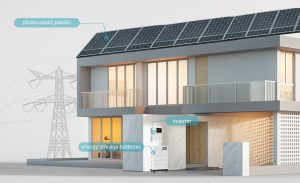
A home battery is the most direct way to turn cheap midday solar into expensive evening power. It lifts self-consumption to around 70–90% for many homes, makes time-of-use tariffs work in your favour, and can pair well with free midday power plans on cloudy days.
The federal Cheaper Home Batteries Program currently provides 6.8 STCs per usable kWh for installs up to 31 December 2026, worth roughly $3,400–$3,700 off a 13.5 kWh battery. The rate drops to 5.7 STCs per kWh from 1 January 2027. Batteries take longer to pay back than panels alone, so run the numbers on your own evening use.
For the full picture, see our complete guide to home solar batteries, including whether a solar battery is worth it in 2026 and how virtual power plants in SA and Victoria can add extra income. If you’re ready to compare options, explore our home and business battery systems.
What about businesses?
Businesses that operate in daylight hours often use most of their solar on site, so feed-in tariffs matter even less and payback can be fast. Many business tariffs also include demand charges, billed on your highest kW use in a set window, which solar and batteries can help reduce. Read about business electricity demand charges, visit our commercial solar guide, or see our commercial solar packages from 20kW to 99kW.
Five steps to cut your power bill with solar in 2026
- Get your data. Download 12 months of smart meter interval data and check your inverter app for total generation.
- Work out your self-consumption. Generation minus exports, divided by generation. This is your baseline.
- Shift your flexible loads to midday. Start with hot water, laundry, the dishwasher and the pool pump. Electrifying gas appliances can add more daytime load; our home electrification guide explains how.
- Compare plans on your real usage. Test flat, time-of-use and free-window plans on Energy Made Easy or Victorian Energy Compare. Look at the whole plan, not just the feed-in rate.
- Review your system. If you export a lot and import a lot in the evening, a battery may pay. If your system is small or old, more panels may be the better step. Our home solar panels buying guide covers sizing and quality.
Our Adelaide and Melbourne installers can help with any of these steps. If you’re in South Australia, see our guide to solar panels in Adelaide; in Victoria, see solar panels in Melbourne.
Frequently asked questions
Is solar still worth it with low feed-in tariffs?
Yes. Most of solar’s value now comes from the power you use at home, which saves 17–59c/kWh, rather than exports worth 0–8c. In our 2026 worked examples, a 6.6kW system pays for itself in about 3–4 years in Adelaide and 3–6 years in Melbourne, then keeps saving for many years after.
Which retailer has the best solar feed-in tariff?
It changes often, and the highest feed-in rate is rarely the cheapest plan overall. Retailers commonly offset a generous feed-in tariff with higher usage or supply charges. Compare the total annual cost on your real usage data using Energy Made Easy in SA or Victorian Energy Compare in Victoria, and review your plan at least once a year.
Should I export less solar on purpose?
You shouldn’t waste power, but you should use more of it at home. Shifting hot water, laundry, the dishwasher, the pool pump and EV charging into the middle of the day turns low-value exports into high-value savings. A battery goes further, storing midday surplus for the evening peak when grid power is most expensive.
Can I get paid for solar exports if I join Solar Sharer or the Midday Power Saver?
It depends on the retailer. Feed-in tariffs are set separately by each retailer, and some free-power plans pay little or nothing for exports. Check the feed-in rate before you switch. For solar homes, a lost feed-in credit can cancel out the value of three free hours.
Why is my power bill still high even though I have solar?
The usual causes are heavy evening use, a fixed daily supply charge, a falling feed-in rate or a tariff change after a smart meter upgrade. A sudden drop in exports can also signal a system fault. Compare your bill with the same quarter last year and check your inverter app for generation.
All our guides on solar savings, feed-in tariffs and bills
- SA Feed-in Tariffs in 2026: Why Batteries and Solar Sharer Now Beat Exporting – current SA retailer rates, the export charge and the legacy 44c scheme.
- Victoria’s Feed-in Tariff in 2026: No Minimum, a New Solar Soak and 3 Free Hours – what changed when the minimum feed-in tariff ended.
- SA Power Networks Flexible Exports, Smarter Homes and the Solar Backstop Explained – fixed vs flexible exports and SA’s grid rules.
- Solar Sharer vs Midday Power Saver: Are Free Midday Power Plans Worth It? – break-even maths for the free-window plans.
- How to Read Your Electricity Bill With Solar – every line on a solar bill, with a worked example.
- Time-of-Use Tariffs and Solar: How to Shift Your Usage and Save – 2026–27 windows and flat vs time-of-use comparisons.
- 15 Ways to Use More of Your Own Solar Power – practical ways to lift self-consumption.
- Solar Payback Period in 2026: How Long Until Solar Pays for Itself? – worked payback examples for Adelaide and Melbourne.
- Solar Export Limits in Victoria: How Much Can You Send to the Grid? – limits by distributor and flexible exports.
Want to know what solar or a battery would save on your bills? Our team designs systems around how your household actually uses power. Browse our home solar packages, browse all our solar guides, or get a free quote.
Sources: AER – Default Market Offer 2026–27; AER – Solar Sharer Offer fact sheet (May 2026); Essential Services Commission – Victorian Default Offer 2026–27; SA Power Networks – Residential tariffs; CitiPower and Powercor – Flexible exports; Clean Energy Regulator – Small-scale Renewable Energy Scheme. Rates, rebates and rules are as of October 2026 and change regularly; check official sources before you decide. Featured image: Benlisquare / Wikimedia Commons, CC BY-SA 4.0.