Key points
- Demand charges bill you for your highest rate of power use (kW or kVA) in a set window, not just the total energy you use.
- In SA, large businesses (over 160,000 kWh a year) pay demand charges. Outside the Adelaide CBD, peak demand is measured 5pm–9pm from November to March.
- Under Powercor’s 2026–27 tariffs, small and medium business demand is measured 10am–6pm on workdays, a window solar can help with.
- Solar cuts demand charges only when the window is in daylight and the sun is out. Batteries and load control do the heavy lifting for evening windows and cloudy days.
Demand charges are a part of many business electricity bills that is based on the highest rate at which you draw power, measured in kilowatts (kW) or kilovolt-amperes (kVA), during a set time window. One half-hour spike can set the charge for a month, or even a whole year. This guide explains how demand charges work for businesses in South Australia and Victoria, how to find them on your bill, and when solar, batteries or simple load changes can bring them down.
What are demand charges?
Your electricity bill measures two different things:
- Energy (kWh): how much electricity you used in total. Think of it as how much water went through the pipe.
- Demand (kW or kVA): the highest rate you drew power at, usually averaged over 15 or 30 minutes. Think of it as how wide the pipe needs to be.
Networks build poles, wires and substations to cope with peak demand, so they charge for it. A business that runs every compressor, oven and air conditioner at once at 5:30pm on a hot day pays more than one that spreads the same energy across the day.
kW versus kVA
Some tariffs charge on kW (real power), others on kVA (apparent power). The difference is the power factor. Motors and older equipment can draw more kVA than kW, so a site with a poor power factor pays more on a kVA tariff. Power factor correction equipment can reduce kVA demand on these sites.
Demand charges matter when weighing up solar and storage, which is why they feature in our commercial solar guide for Australian businesses.
How do demand charges work in South Australia?
SA Power Networks groups business customers by annual usage:
- Small business (up to 40,000 kWh a year): charged on energy only, on flat-rate or time-of-use network tariffs. They can opt in to a demand tariff.
- Medium business (40,000–160,000 kWh): a demand component applies where demand exceeds 120 kVA, based on the highest 30-minute kVA over the last 12 months. These customers can elect a time-of-use-only tariff instead.
- Large business (over 160,000 kWh): all are on a network demand tariff.
Large business demand in SA
Large business tariffs use two demand measures, both charged in $/kVA:
- Anytime demand: the highest 30-minute interval in the last 12 months, at any time of day.
- Peak demand: outside the CBD, the highest 4-hour daily average between 5pm and 9pm on any day. In the CBD, the highest 6-hour daily average between 11am and 5pm on workdays. Peak demand is measured from November to March.
On the annual tariff, the peak demand value is billed all year. On the monthly tariff, it is measured each month and billed from November to March only, at 150% of the annual price. SA Power Networks says the evening window reflects how rooftop solar has pushed the summer peak outside the CBD into the late afternoon and evening. SA Power Networks also offers flexible connections for eligible large sites, where flexible demand is charged at 50% of anytime demand in return for staying within time-varying limits.
How do demand charges work in Victoria?
Victoria has five distribution networks, each with its own tariffs. Powercor, which covers western Victoria and Melbourne’s west, is a useful example. Its 2026–27 tariffs include:
- Small and medium business demand: the highest half-hour kW between 10am and 6pm local time on workdays. Summer rates apply 1 December to 31 March, non-summer rates the rest of the year.
- Large business 12-month rolling demand: the highest 15-minute kVA between 7am and 7pm on workdays over the previous 12 months.
- Large business incentive demand: the highest half-hour kVA in afternoon or early evening windows on workdays, December to March and May to August.
- Capacity charges on some newer tariffs, based on the maximum 30-minute kW demand at any time over a rolling 12 months.
CitiPower and United Energy are Powercor’s sister networks, while Jemena and AusNet Services set their own tariffs. Check which network and tariff your site is on. For Melbourne-specific incentives and network rules, see our guide to commercial solar in Melbourne.
| Network and tariff (2026–27) | Demand measured | Can solar alone help? |
|---|---|---|
| SAPN large business, outside CBD | 4-hour average, 5pm–9pm, Nov–Mar, plus anytime 30-min peak | Very little. The window starts as solar fades. |
| SAPN large business, Adelaide CBD | 6-hour average, 11am–5pm workdays, Nov–Mar, plus anytime 30-min peak | Yes, on sunny days |
| SAPN medium business (demand over 120 kVA) | Highest 30-min kVA over 12 months | Unreliable. The peak may occur when solar is low. |
| Powercor small and medium business | Highest 30-min kW, 10am–6pm workdays | Yes on sunny days, less on cloudy days and after 4pm |
| Powercor large business | Rolling 12-month kVA, 7am–7pm workdays | Partly. One cloudy peak can set the charge for a year. |
How do you find demand charges on your bill?
Retailers present network charges differently. Look for lines labelled demand, capacity, peak demand, anytime demand or kVA, usually priced per kW or kVA per day or month. Larger businesses often see network charges listed separately. If you cannot find them, ask your retailer which network tariff your site is on and request 12 months of interval data. Our guide on how to read your electricity bill with solar explains the common line items.
The interval data is the key. It shows exactly when your peaks happen, how often, and what caused them, which tells you whether solar, a battery or a simple operational change is the right fix.
Can solar reduce demand charges?
Sometimes. Solar reduces the power you draw from the grid while it is generating. Whether that lowers your demand charge depends on three things:
- The window. Daytime windows such as Powercor’s 10am–6pm or SA Power Networks’ CBD window line up with solar. Evening windows, like 5pm–9pm across most of SA, do not.
- The measurement period. A monthly peak gives solar a chance every month. A 12-month rolling or anytime peak only needs one cloudy afternoon to set the charge for a year.
- Panel direction. West-facing panels produce more late in the day, which can help with windows that end at 6pm or 7pm.
The safest approach is to count solar’s energy savings in your business case, and treat any demand reduction from solar alone as a bonus unless your data proves otherwise.
How do batteries and load control cut demand charges?
Batteries can discharge during the demand window to hold grid draw below a target, a technique called peak shaving. For a 4-hour evening window, you need roughly 4 kWh of usable storage for each kW you want to remove, plus a margin. Our guide to commercial battery storage covers sizing, costs and the federal discount for small businesses.
Load control is often cheaper:
- Stagger start-up of compressors, kilns, ovens and air conditioning instead of switching everything on together.
- Pre-cool buildings and cool rooms in the early afternoon using solar, then ease off in the peak window.
- Schedule EV and forklift charging outside the demand window.
- Fix poor power factor on kVA tariffs.
Worked example (illustrative rates)
A cold store in Adelaide’s northern suburbs is on SA Power Networks’ large business annual demand tariff. Its peak demand, the highest 4-hour average between 5pm and 9pm last summer, was 90 kVA. Suppose its peak demand rate were $100 per kVA per year. This is a made-up round number for illustration, so check your own tariff.
- Pre-cooling with afternoon solar and staggering compressor start-up cuts the evening average to 75 kVA. Saving: 15 kVA × $100 = $1,500 a year, at almost no cost.
- A battery delivering 25 kW for 4 hours brings the average down to 50 kVA. Saving: a further 25 kVA × $100 = $2,500 a year, plus the value of the evening energy it supplies.
The lesson: fix operations first, then size a battery to remove the remaining peak, and value it on demand and energy savings together.
Frequently asked questions
What is a demand charge on a business electricity bill?
A demand charge is a network charge based on the highest rate at which your business draws power, in kW or kVA, during a set window. It is usually measured over 15 or 30 minutes and priced per kW or kVA per day or month. A single short spike can set the charge for a month or a year.
When are demand charges measured in South Australia?
For SA Power Networks large business tariffs outside the Adelaide CBD, peak demand is the highest 4-hour daily average between 5pm and 9pm, measured November to March. In the CBD it is a 6-hour average between 11am and 5pm on workdays. Anytime demand is the highest 30-minute interval in 12 months.
Do solar panels reduce demand charges?
Only when the demand window falls in daylight and the sun is shining at your peak. Solar helps with daytime windows like Powercor’s 10am–6pm small business window. It does little for evening windows like SA Power Networks’ 5pm–9pm peak. Batteries and load control are more reliable for cutting demand.
How can a small business avoid demand charges?
Check whether you are on a demand tariff at all, as many small businesses are not. If you are, compare tariff options with your retailer, stagger equipment start-up, shift flexible loads out of the window and consider a battery. In SA, medium businesses on a demand tariff can elect a time-of-use-only tariff instead.
If demand charges are a big part of your bill, our team can analyse your interval data and model solar, load shifting and a business solar battery system side by side. Explore our commercial solar options, read how time-of-use tariffs work with solar, see our commercial solar guide for Adelaide businesses, or request a free energy assessment.
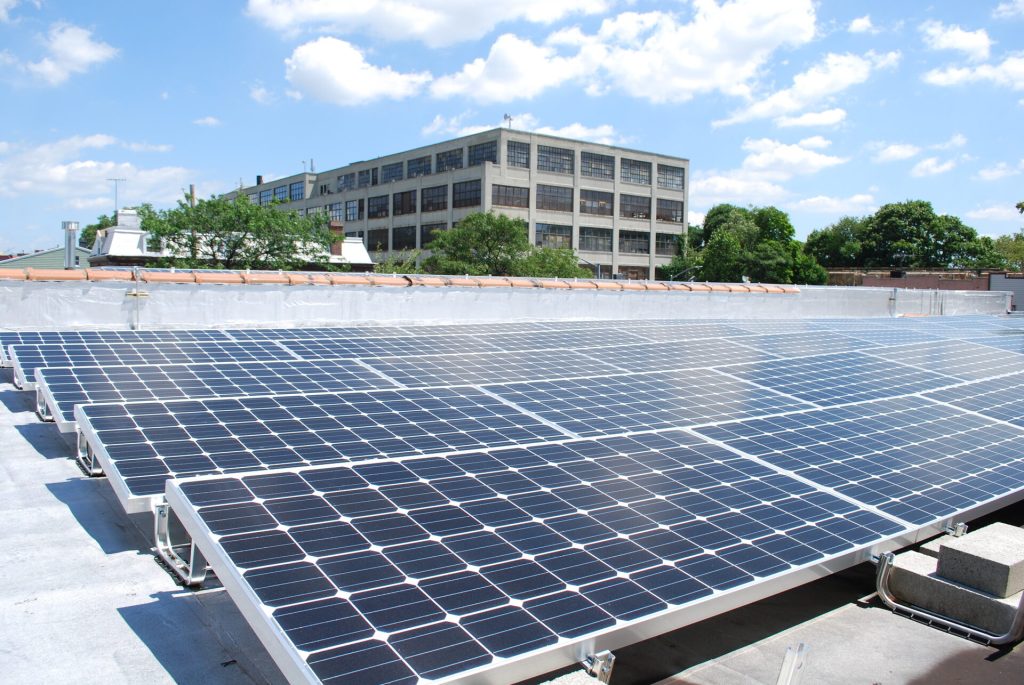
Sources: SA Power Networks – Large business tariff information; SA Power Networks – Small and medium business network tariffs; AER – Powercor 2026–27 statement of compliance (7 May 2026). Network tariffs are reset each July and retailers may package them differently; check your own bill and tariff. Featured image: U.S. Department of Energy / Wikimedia Commons, Public domain.