Key points
- Typical Melbourne prices after STCs (Sept 2026): about $26,150 for 30 kW, $47,090 for 50 kW and $77,310 for 100 kW, including GST.
- Victorian businesses can stack STCs with VEU certificates (VEECs) on systems of 30–200 kW under the VEU commercial and industrial solar activity.
- VEECs per kW roughly double above 100 kW, and STCs now apply up to 1 MW, so 101–200 kW systems deserve a fresh look.
- Powercor’s small business demand charges are measured 10am–6pm on workdays, a window that solar can help reduce.
Commercial solar in Melbourne is better value in 2026 than at any time in the past few years. A typical 100 kW system averages about $77,000 after the federal STC discount, and Victorian businesses can add a second incentive through the Victorian Energy Upgrades (VEU) program for systems between 30 and 200 kW. This guide covers prices, both incentives, network approvals, demand tariffs and a worked example for a Melbourne warehouse.
How much does commercial solar cost in Melbourne?
Solar Choice’s September 2026 commercial price index gives these Melbourne averages. They include the STC discount and GST, but not network studies, protection equipment, ground mounting or meter changes.
| System size | Melbourne average (after STCs, incl. GST) | Approx. annual output in Melbourne |
|---|---|---|
| 10 kW | $10,090 | 13,500 kWh |
| 30 kW | $26,150 | 40,500 kWh |
| 50 kW | $47,090 | 67,500 kWh |
| 70 kW | $62,180 | 94,500 kWh |
| 100 kW | $77,310 | 135,000 kWh |
Output assumes about 3.7 kWh per kW per day, the middle of the typical 3.6–3.8 range for a well-oriented system in Melbourne. North-facing roofs do best, but east-west layouts on large flat or low-pitch warehouse roofs work well and spread generation across the working day. For more detail on what drives price, see our guide to commercial solar costs in 2026. For the bigger picture, start with our commercial solar guide for Australian businesses.
What incentives can Melbourne businesses claim?
Federal STCs
STCs are created for every eligible system and usually appear as a discount on the invoice. Melbourne is in Zone 4 (rating 1.185) and systems installed in 2026 use a 5-year deeming period. A 99 kW system gets about 586 STCs, worth roughly $23,400 at early October 2026 prices. Since 1 October 2026, systems from 100 kW to 1 MW can also claim STCs with a fixed 5-year deeming period. We cover that change in the commercial solar rebate now covering systems up to 1 MW.
VEU commercial and industrial solar activity (VEECs)
Since 29 September 2025, the VEU program has included a deemed commercial and industrial (C&I) solar activity. It lets an accredited provider create Victorian energy efficiency certificates (VEECs) for new, replacement or extended solar systems of 30 to 200 kW on non-residential sites. The Essential Services Commission’s activity guide confirms that providers can claim VEECs as well as STCs or LGCs, so the two incentives stack.
The ESC formula is: system size (kW) × input factor × 10-year lifetime × regional factor. The input factor is 0.133 for systems up to 100 kW and 0.25 above 100 kW. The regional factor is 0.98 for metropolitan Victoria and 1.04 for regional Victoria.
| System size (metro Melbourne) | STCs (2026) | VEECs | Combined value (approx.) |
|---|---|---|---|
| 30 kW | 177 (~$7,100) | 39 (~$3,300) | ~$10,400 |
| 50 kW | 296 (~$11,800) | 65 (~$5,500) | ~$17,300 |
| 99 kW | 586 (~$23,400) | 129 (~$11,000) | ~$34,400 |
| 150 kW | 888 (~$35,400) | 367 (~$31,200) | ~$66,600 |
| 200 kW | 1,185 (~$47,200) | 490 (~$41,700) | ~$88,900 |
Values assume about $39.85 per STC and about $85 per VEEC (October 2026). Certificate prices move, and the provider who creates the certificates keeps a share, so the discount you see will be lower. STCs above 100 kW depend on the new mid-scale process, which the Clean Energy Regulator expects to open for applications in mid to late November 2026.
VEU eligibility in brief
- Non-residential, grid-connected premises (not houses or apartment buildings).
- Panel capacity from 30 kW to 200 kW, with at least 30 kVA of connected inverter capacity, installed under the distributor’s negotiated connection contract.
- CEC-listed panels and inverters, a 10-year panel warranty, a 5-year inverter warranty and a monitoring portal the business can access.
- For systems up to 100 kW, the panel maker must take part in the Solar Panel Validation Initiative.
- One system per meter (NMI). Systems above 200 kW cannot use the deemed activity, but may use the VEU measurement and verification method instead.
The VEU also discounts heat pumps, efficient air conditioning and other upgrades. See our guide to Victorian Energy Upgrades in 2026.
Worked example: a 100 kW system on a Melbourne warehouse
A distribution business in Melbourne’s west runs six days a week with forklift charging, lighting and office loads during the day.
- Price: about $77,300 after STCs including GST (index average), or about $70,300 excluding GST.
- VEEC discount: about 130 VEECs, worth up to about $11,000 before the provider’s share.
- Output: about 135,000 kWh a year.
- Savings: if 75% is used on site at an assumed 22c/kWh (check your own bill), that is about $22,000 a year, plus small export credits.
On those assumptions, simple payback is about 3 years before tax depreciation. If the roof could take 150 kW and the site can use most of the output, the combined STC and VEEC value rises steeply, so it is worth modelling both sizes. Our 50kW commercial solar system is a common starting point for smaller sites.
What network rules apply to commercial solar in Victoria?
Melbourne is served by five distributors: CitiPower (inner city), Jemena (north-west), United Energy (south-east), AusNet Services (east and outer north) and Powercor (west). Each has its own process, but the broad steps are similar:
- Up to 30 kVA of inverter capacity: a standard connection, similar to a home system.
- Above 30 kVA: a negotiated connection with an application, technical assessment and extra costs. Jemena, for example, publishes separate requirements for systems above 30 kVA and up to 200 kVA.
- Emergency backstop: new and upgraded solar in Victoria must support the emergency backstop. Jemena lets 30–200 kVA systems use an internet connection or a generation monitoring meter, while systems over 200 kVA need a SCADA connection.
- Export limits: larger systems may be export-limited, or approved with zero export, depending on the local network. Our guide to solar export limits in Victoria explains how limits are set.
Start the network application early. It can take weeks, and the outcome may change the design.
How do Victorian demand tariffs affect commercial solar in Melbourne?
Many Victorian businesses pay a demand charge as well as energy charges. Under Powercor’s 2026–27 tariffs, small and medium business demand charges are based on the highest half-hour kW demand between 10am and 6pm on workdays, with a higher rate from December to March. Large business tariffs use a 12-month rolling kVA demand measured 7am–7pm on workdays.
Because these windows sit in daylight hours, solar can trim peak demand on sunny days. One cloudy afternoon can still set a high peak, so a battery or load control is often needed to lock in demand savings. CitiPower and United Energy, Powercor’s sister networks, and Jemena and AusNet each publish their own tariffs, so check yours. Our guide to business demand charges explains how to read them.
Frequently asked questions
Can Melbourne businesses get STCs and VEECs on the same solar system?
Yes. The Essential Services Commission confirms accredited providers can claim VEECs under the commercial and industrial solar activity as well as STCs. The system must be 30–200 kW on a non-residential site and meet VEU product, warranty and installation requirements. Ask your installer whether they or a partner can create the VEECs.
Is there a Victorian government rebate for commercial solar?
The Solar Homes rebate is for households, not businesses. For businesses, the main Victorian incentive is the VEU commercial and industrial solar activity, which creates VEECs for 30–200 kW systems. It stacks with federal STCs. Certificate values change, so ask for the discount to be shown on your quote.
How much does a 100kW solar system cost in Melbourne?
The September 2026 Solar Choice index puts the Melbourne average at about $77,310 after STCs and including GST. VEU certificates can reduce that further. Network costs, protection equipment and roof conditions can add to the price, so ask for an itemised quote.
Do I need network approval for commercial solar in Melbourne?
Yes. Every grid-connected system needs approval from your distributor. Systems above 30 kVA of inverter capacity go through a negotiated connection process with a technical assessment and extra fees. Your installer usually lodges the application, but allow several weeks before installation.
Our Melbourne installers are based in Wollert and work with businesses across the metro area. Learn more about solar panels in Melbourne, browse our commercial solar packages, or get a free commercial solar quote.
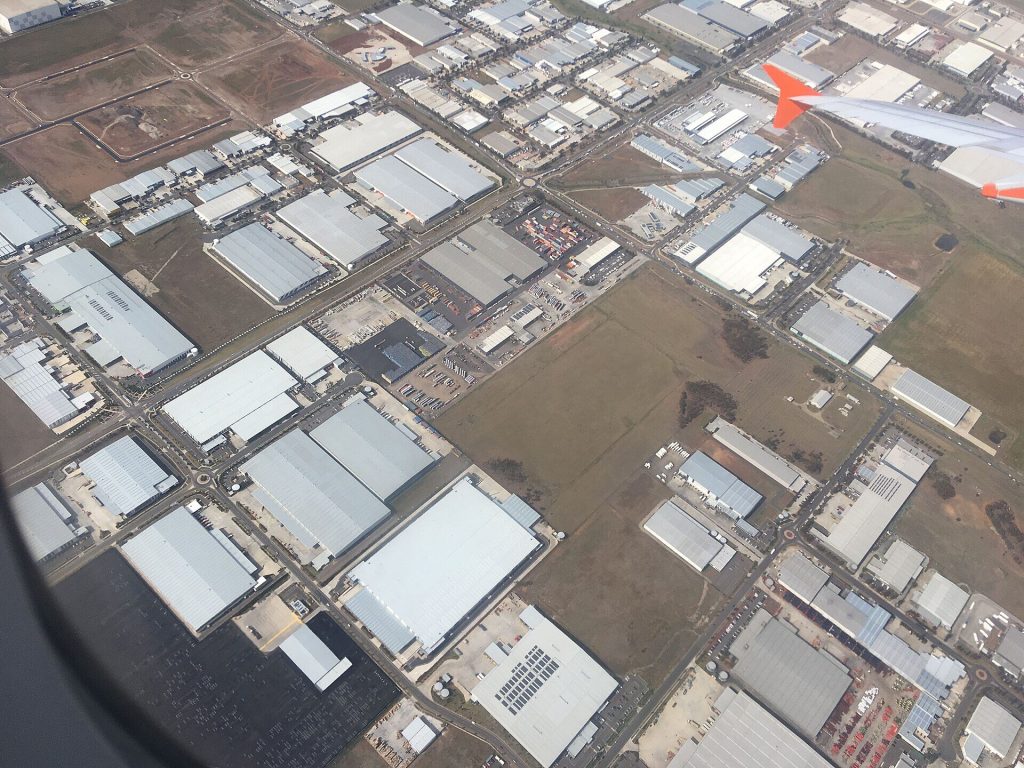
Sources: Essential Services Commission – Commercial and Industrial Solar PV Systems Activity Guide (31 Oct 2025); Clean Energy Regulator – Mid-scale solar (updated 7 Oct 2026); Solar Choice – Commercial solar prices (Sep 2026); AER – Powercor 2026–27 statement of compliance (7 May 2026); Jemena – Solar installers hub. Certificate prices and tariffs change; check current figures before you sign. Featured image: Christophe95 / Wikimedia Commons, CC BY-SA 4.0.