Key points
- From 1 October 2026, solar systems from 100 kW up to 1 MW can claim STCs under the Small-scale Renewable Energy Scheme. The old limit was 100 kW.
- These “mid-scale” systems get a fixed 5-year deeming period. That is worth roughly $69,000 for a 250 kW system in Adelaide at current STC prices.
- STC applications for mid-scale systems are expected to open in mid to late November 2026. Some rules are still being finalised.
- If you take STCs, you cannot create REGO certificates for the deeming period, and new mid-scale systems cannot earn LGCs.
The federal commercial solar rebate now covers systems up to 1 MW. Since 1 October 2026, businesses installing between 100 kW and 1 MW of solar can claim small-scale technology certificates (STCs) as an upfront discount, the same way smaller systems always have. For a 250 kW system in Adelaide that is worth about $69,000. Here is what changed, what is still being worked out, and whether it changes the size of system you should install.
What changed on 1 October 2026?
The Renewable Energy (Electricity) Regulations 2001 were amended to extend the Small-scale Renewable Energy Scheme (SRES) for solar PV from 100 kW to 1 MW. The Clean Energy Regulator (CER) calls systems in the new band “mid-scale” solar.
Until now there was a sharp line at 100 kW. Systems up to 100 kW received STCs as a large upfront discount. Systems above 100 kW had to be accredited as power stations under the Large-scale Renewable Energy Target and earned large-scale generation certificates (LGCs) each year for the energy they produced. LGC prices have fallen to about $7.90, so that ongoing income was small and the paperwork was heavy. Most businesses simply capped their systems at 99 or 100 kW.
The change removes that cliff. It is part of a wider set of incentives covered in our commercial solar guide for Australian businesses.
Which systems are eligible for the mid-scale commercial solar rebate?
According to the CER’s transitional guidance, a mid-scale system must:
- have a capacity greater than 100 kW and up to 1 MW
- be installed on or after 1 October 2026
- use panels and inverters on the Clean Energy Council’s approved list, installed to Solar Accreditation Australia (SAA) guidelines
- comply with all planning approvals and network connection requirements
- meet any additional evidence requirements in the regulations
“Installed” means the date the system is first capable of producing and delivering electricity. That is the testing and commissioning date on the electrical compliance certificate. Projects that were planned or started before 1 October can qualify, as long as commissioning happened on or after that date.
Both grid-connected and stand-alone (off-grid) mid-scale systems can be eligible, which matters for farms and remote sites.
Extensions to existing systems
Adding to an existing system can also qualify. Only the new capacity earns STCs, and the combined system must end up above 100 kW and no more than 1 MW. The CER’s own example: an existing 80 kW system expanded by 40 kW after 1 October may be eligible as a 120 kW mid-scale system, with STCs on the extra 40 kW only.
Sites with more than one system
The 1 MW limit looks at related systems on the same or adjoining sites, how they are connected and how they are metered. One meter (NMI) does not automatically make two arrays one system, and separate sub-meters do not automatically make them separate. If you already have an accredited power station creating LGCs, it stays in the large-scale scheme and needs separate metering. The CER says more guidance on related systems, extensions and upgrades is still to come.
How much is the rebate worth?
STCs are calculated as system size × zone rating × deeming years. Adelaide is in Zone 3 (rating 1.382) and Melbourne in Zone 4 (1.185). Mid-scale systems use a fixed 5-year deeming period. The CER’s mid-scale STC calculator gives an estimate for your exact system.
| System size | STCs in Adelaide | Approx. value | STCs in Melbourne | Approx. value |
|---|---|---|---|---|
| 99 kW (small-scale) | 684 | $27,300 | 586 | $23,400 |
| 150 kW | 1,036 | $41,300 | 888 | $35,400 |
| 250 kW | 1,727 | $68,800 | 1,481 | $59,000 |
| 500 kW | 3,455 | $137,700 | 2,962 | $118,000 |
| 1 MW | 6,910 | $275,400 | 5,925 | $236,100 |
Values assume about $39.85 per STC, close to the early October 2026 spot price. They line up with the government’s own estimates of around $68,000 off a 250 kW system and $136,000 off a 500 kW system. Installers typically pass on slightly less than spot price to cover their costs and risk.
Compare that with the old pathway. A 250 kW system in Adelaide makes roughly 390 MWh a year, so at about $7.90 per LGC it would earn around $3,100 a year, and only until the scheme ends in 2030. The upfront STC discount is many times larger.
For the full STC formula and how it applies to smaller systems, see STCs explained: how the federal solar rebate is calculated.
Why the fixed deeming period matters
For systems up to 100 kW, the deeming period shrinks each year: 5 years for 2026 installs, then 4 in 2027, 3 in 2028 and so on until the scheme ends in 2030. The CER says eligible mid-scale systems instead have a fixed 5-year deeming period. In 2026 there is no difference. From 2027, a mid-scale system may keep a bigger rebate per kW than a sub-100 kW system installed at the same time. Check the CER calculator before relying on this for a 2027 project.
STCs or REGO: which should a business choose?
Owners of mid-scale systems choose between the upfront STC benefit and the Renewable Electricity Guarantee of Origin (REGO) scheme, which issues certificates for renewable electricity generated. The CER warns that choosing one may affect eligibility for the other. If you apply for STCs, you will not be able to create REGO certificates for the deeming period. A system also cannot create both STCs and LGCs for the same capacity, and new mid-scale systems are supported through the SRES, not the large-scale scheme.
- Choose STCs if your priority is the lowest upfront cost and fastest payback. This suits most small and medium businesses.
- Consider REGO if your business needs to own and report the renewable attributes of its generation, for example for emissions reporting or customer sustainability claims. Get advice before deciding.
When can you actually claim?
STC applications for mid-scale systems are not open yet. The CER expects them to open in mid to late November 2026, once its systems are ready. Eligible systems installed from 1 October will be assessed against the rules that applied from that date, regardless of when the application goes in. If your project was mid-construction during the changeover, the CER asks you to raise transition issues early, and no later than one week after mid-scale applications open.
Mid-scale applications need more evidence than a small system. Keep:
- system design documents and metering information
- network connection approvals, planning and building approvals, and structural engineering reports where applicable
- electrical compliance certificates and testing and commissioning records
- geotagged, time-stamped photos showing the accredited installer on site during final commissioning
The CER says applications may be rejected if the evidence does not show the accredited installer attended the final stage of installation and commissioning. Ask your installer up front how they will handle the STC claim, and whether the discount will appear on the invoice or be paid after approval.
Does this change the “stay under 100 kW” rule?
Yes, for the rebate. There is no longer an STC reason to stop at 99 kW if your site can use more solar. But 99 kW systems remain a popular size, for practical reasons:
- It fits a lot of businesses. A 99 kW system makes roughly 155 MWh a year in Adelaide. That suits a large share of warehouses, wineries, schools and factories without exporting too much.
- The small-scale process is open now. Sub-100 kW STCs can be created today. Mid-scale claims wait for the CER’s new process and need extra evidence.
- Rules for larger sites are still settling. Guidance on related systems, extensions and upgrades is still to be published.
Network rules are a different matter. We checked SA Power Networks and Victorian distributor requirements and did not find a network threshold at 100 kW. The meaningful network lines are at 30 kVA and 200 kVA of inverter capacity. In SA, inverter systems above 30 kVA go through SA Power Networks’ medium embedded generation process (31–500 kVA) with an application fee, assessment, connection contract and witnessed commissioning, and remote monitoring and control is required for systems able to export more than 200 kW through a single meter. In Victoria, Jemena, for example, treats systems above 30 kVA as negotiated connections with extra costs, and requires a different backstop connection method above 200 kVA. For SA export rules more broadly, see SA Power Networks flexible exports explained.
So a business choosing between 99 kW and, say, 150 kW now faces much the same network process either way. Victorian sites get an extra nudge: the VEU commercial solar activity uses a higher input factor above 100 kW, which roughly doubles VEECs per kW. Our guide to commercial solar in Melbourne covers that in detail.
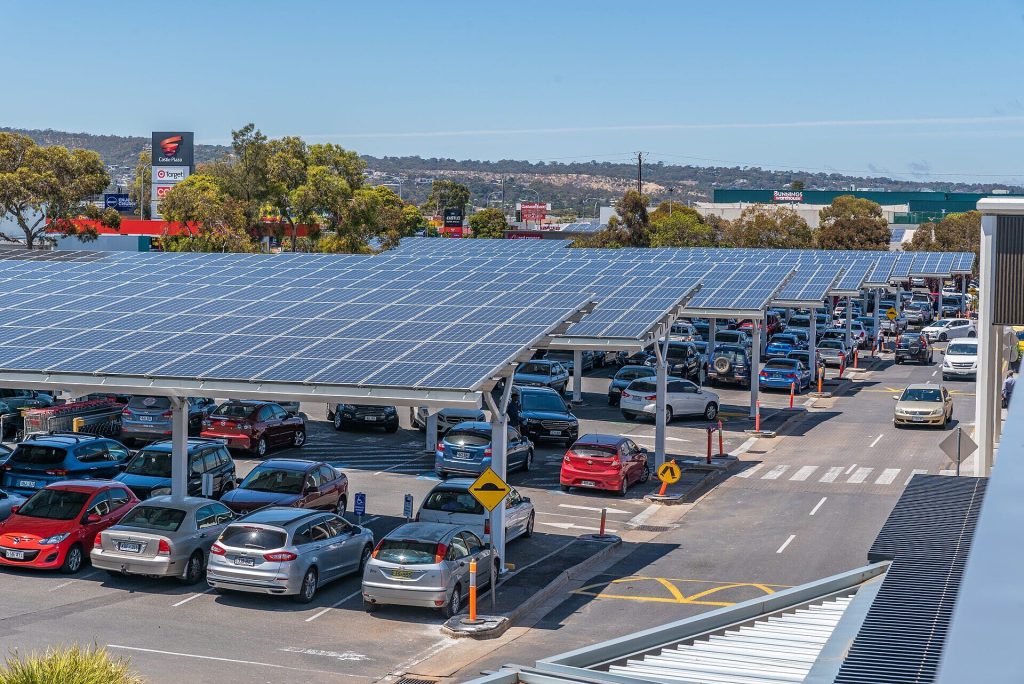
Our 99kW commercial solar system remains a strong default for many sites. For larger roofs, ground mounts or carports, talk to us about a design above 100 kW. Price ranges for each size are in our guide to commercial solar costs in 2026, and the tax side is covered in commercial solar tax and depreciation.
Frequently asked questions
Can a 200kW commercial solar system get STCs now?
Yes, if it is installed (commissioned) on or after 1 October 2026 and meets the eligibility rules. Systems from 100 kW to 1 MW are now “mid-scale” under the Small-scale Renewable Energy Scheme, with a fixed 5-year deeming period. Applications are expected to open in mid to late November 2026.
What happens to systems installed before 1 October 2026?
Systems over 100 kW that were commissioned before 1 October 2026 are not eligible for mid-scale STCs. They stay under the large-scale scheme if accredited. An existing system can be extended after 1 October, and the new capacity may earn STCs if the combined system is above 100 kW and up to 1 MW.
Can I claim STCs and REGO certificates for the same system?
Not for the same period. The Clean Energy Regulator says that if you apply for STCs you will not be able to create REGO certificates for the deeming period. A system also cannot create both STCs and LGCs for the same capacity. Choose based on whether upfront savings or owning renewable certificates matters more.
Is 99kW still the best commercial solar size?
Not automatically. The STC reason to stop at 99 kW has gone for systems commissioned from 1 October 2026. A 99 kW system is still a good fit for many sites because of its output and simpler paperwork, but larger businesses should now model sizes above 100 kW too.
If you are weighing up a system above 100 kW, our Adelaide and Melbourne team can model both options using your interval data and explain the STC process step by step. Explore our commercial solar packages or request a free business solar assessment.
Sources: Clean Energy Regulator – Mid-scale solar (updated 7 Oct 2026); Clean Energy Regulator – Transitional guidance for mid-scale solar (PV) systems (2026); SA Power Networks – Medium embedded generation; SA Power Networks – Large embedded generation; Jemena – Solar installers hub; Essential Services Commission – C&I Solar PV Activity Guide (31 Oct 2025). The mid-scale rules are new and some details are still being finalised; check the CER website before committing to a project. Featured image: Flicker02 / Wikimedia Commons, CC BY-SA 4.0.