Key points
- The standard solar export limit in Victoria is usually 5 kW per phase: about 5 kW for a single-phase home and up to 15 kW for a three-phase home.
- Congested parts of the network can get much less, from 1.5 kW per phase down to 0 kW.
- Flexible exports are arriving: CitiPower, Powercor and United Energy now offer them (up to 10 kW) to sites that would otherwise get a 0 kW limit, and AusNet offers up to 5 kW per phase to customers who’d otherwise be limited to 1.5 kW.
- With feed-in tariffs of 0–8c/kWh, an export limit usually costs far less than people expect. Oversizing panels is still worth it.
The solar export limit in Victoria for most homes is 5 kW per phase, set by your local electricity distributor when your installer applies to connect. That means a typical single-phase house can send up to 5 kW to the grid at any moment, even if the inverter is bigger. Limits vary by distributor and street, so here’s how they work, what each Victorian network allows as of October 2026, and how to design a system that makes the most of yours.
What is a solar export limit?
An export limit caps how much power your system can push into the grid at any instant, measured in kilowatts (kW). It’s different from two other numbers on your quote:
- Panel capacity (for example 6.6 kW or 13 kW): the total rated output of your panels.
- Inverter capacity (for example 5 kW or 10 kW): the most AC power the inverter can produce. Under the STC rules, panels can exceed inverter capacity by up to a third, so 6.6 kW of panels on a 5 kW inverter is standard.
- Export limit: the most that can flow out to the grid after your home has used what it needs.
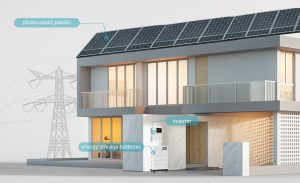
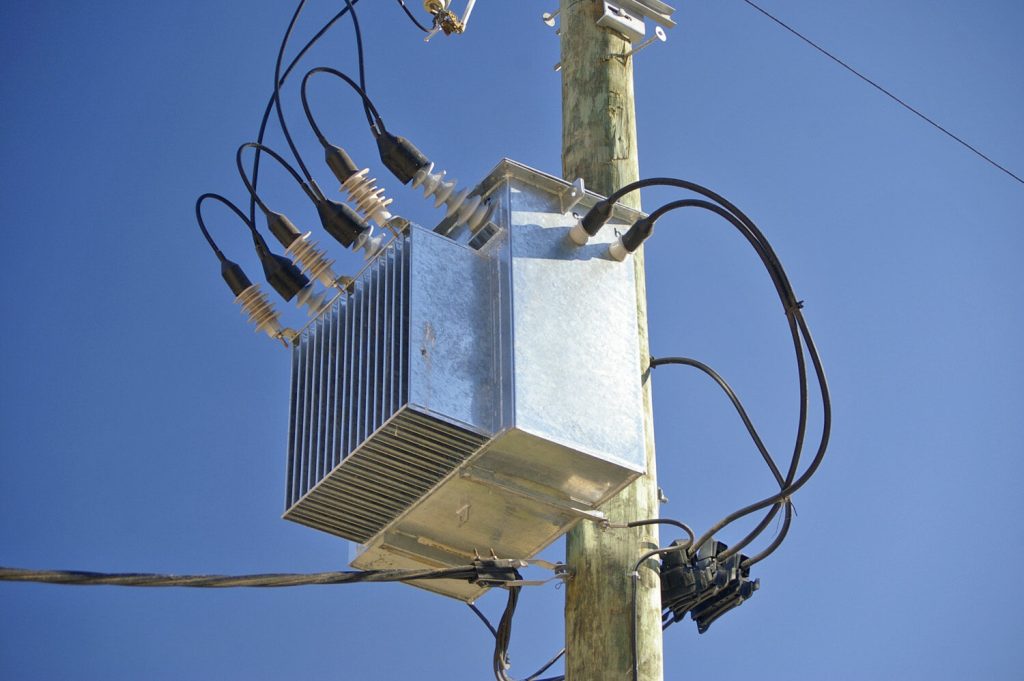
The inverter enforces the limit using a meter at your switchboard. When your home’s use plus the limit is less than what the panels could produce, the inverter throttles back. Distributors set limits to protect local voltage and equipment on streets with lots of solar. This guide is part of our guide to solar feed-in tariffs, savings and bills.
Solar export limits in Victoria by distributor
Victoria has five electricity distributors. Your bill shows which one serves you. Here’s how their limits compared as of October 2026:
| Distributor (area) | Standard export limit | Flexible exports |
|---|---|---|
| CitiPower (Melbourne CBD, inner suburbs) | 5 kW per phase | Offered to sites that would otherwise get 0 kW: up to inverter size, maximum 10 kW |
| Powercor (western Victoria, outer western Melbourne) | 5 kW per phase (up to 15 kW three-phase) | Offered to sites that would otherwise get 0 kW: up to inverter size, maximum 10 kW |
| United Energy (south-east Melbourne, Mornington Peninsula) | 5 kW per phase | Offered to sites that would otherwise get 0 kW: up to inverter size, maximum 10 kW |
| Jemena (north and north-west Melbourne) | 5 kW per phase; single-phase solar inverters up to 10 kW | Planned from 2026 |
| AusNet Services (eastern Victoria, outer north and east Melbourne) | 5 kW per phase; some constrained sites 1.5 kW per phase; rural SWER lines about 3.5 kW | Up to 5 kW per phase for eligible customers otherwise limited to 1.5 kW |
These are typical limits, not guarantees. The limit for your address is set in your connection pre-approval, and a constrained street can get a lower figure. Systems that can’t meet Victoria’s emergency backstop requirements are generally limited to very low or zero export.
How do flexible exports work in Victoria?
A flexible (or dynamic) export limit changes through the day based on how much spare capacity your local network has. Most of the time you can export far more than a fixed limit allows, and only at busy times is your export turned down.
- Powercor, CitiPower and United Energy now offer flexible exports to their most constrained customers, those whose pre-approval comes back at 0 kW (United Energy’s rollout began in July 2026). They can choose a flexible connection, exporting up to their inverter’s capacity (maximum 10 kW) most of the time, or a 0 kW static limit. In the networks’ 12-month trial, customers exported without restriction more than 90% of the time.
- AusNet offers flexible exports of up to 5 kW per phase, depending on available capacity, to customers who would otherwise get a 1.5 kW fixed limit.
- Jemena is moving the same way, with flexible exports planned from 2026. Ask your installer what’s available at your address.
To use flexible exports you need a reliable internet connection and an inverter that supports CSIP-AUS, the Australian standard that lets the network send export limits to your inverter. Since October 2024, new installations in Victoria need a compatible inverter. South Australia has run flexible exports since 2023; see how SA Power Networks flexible exports work for a comparison.
How much does an export limit actually cost you?
Less than most people think. Take a single-phase home with 13 kW of panels on a 10 kW inverter and a 5 kW export limit. On a clear summer day, the inverter might produce 9–10 kW around midday. If the house is using 1 kW, up to 4 kW is held back for a few hours.
Across a year that might add up to somewhere between a few hundred and a couple of thousand kilowatt-hours of curtailed solar, depending on orientation and your daytime use. At a 4c feed-in tariff, 1,500 kWh is worth about $60 a year. Victoria has had no minimum feed-in tariff since July 2025, and many plans pay 0–8c; see Victoria’s feed-in tariff in 2026 for current rates.
Meanwhile, the extra panels keep producing useful power in the mornings, late afternoons, winter and cloudy days, when you’d otherwise be buying grid power at 17–48c. That’s why oversizing usually still pays.
Tip: curtailed solar is solar you could use. Run the dishwasher, pool pump, hot water and EV charger in the middle of the day, or add a battery, and the export limit barely matters. Our list of ways to use more of your own solar has 15 ideas.
How do I find out my export limit?
- Ask your installer before you sign. A good installer lodges a pre-approval with your distributor and tells you the approved export limit before installation.
- Check your paperwork. Your connection approval, Certificate of Electrical Safety or installer handover pack should state the limit.
- Check your inverter settings or app. Many inverters display the configured export limit.
- Ask your distributor. Quote your NMI (on your bill) and ask what export limit applies to your connection.
Should I design my system around the export limit?
Yes, but don’t shrink your system to match it. The practical rules for 2026:
- Single-phase homes can usually install up to a 10 kW inverter (check your distributor’s rules) with up to about 13.3 kW of panels, exporting up to 5 kW.
- Three-phase homes can install larger systems and export up to 5 kW per phase, which suits big homes, EV owners and small businesses.
- Choose a CSIP-AUS compatible inverter so you can move to flexible exports when they reach your street.
- Consider a battery if you’re on a constrained street with a low limit.
Our guides to choosing the right system size and string, micro and hybrid inverters go deeper on design.
Frequently asked questions
What is the maximum solar export in Victoria for a single-phase home?
Most Victorian distributors allow up to 5 kW of export on a single-phase connection, although constrained streets can be limited to 1.5 kW or even 0 kW. Under the CitiPower, Powercor and United Energy flexible export offer, eligible customers can export up to their inverter’s capacity, to a maximum of 10 kW, when the network has room.
Can I install a 10 kW inverter on single phase in Victoria?
Often, yes. Several distributors, including Jemena and AusNet, allow single-phase solar inverters up to 10 kW, but exports are still limited, usually to 5 kW. Rules differ by distributor and battery setup, so your installer must confirm the approved inverter size and export limit in the pre-approval.
Why did my distributor give me a 0 kW export limit?
A zero export limit usually means your local transformer or street has little spare capacity, often because many neighbours already export solar. You can still install solar and use it all at home. In the CitiPower, Powercor and United Energy areas, eligible customers with a 0 kW pre-approval can now choose a flexible export connection instead.
Is an export limit the same as the emergency backstop?
No. An export limit applies every day. The emergency backstop, required for new and upgraded Victorian systems since 1 October 2024, lets distributors reduce or switch off solar only during rare grid emergencies directed by AEMO. The government expects it to be needed only around 12–19 hours a year, so most households will barely notice it.
Our Melbourne installers can check your likely export limit and design a system around it. Find out more about solar panels in Melbourne, compare our 13kW solar system for larger homes, or get a free quote.
Sources: CitiPower and Powercor – Flexible exports; AusNet Services – Flexible exports; SolarQuotes – Victorian grid connection rules (Sep 2026); ARENA – United Energy flexible exports trial (May 2024); Essential Services Commission – Victorian Default Offer 2026–27. Export limits are set address by address and network rules change; confirm yours in your pre-approval. Featured image: Bidgee / Wikimedia Commons, CC BY 3.0.