Key points
- Start with your daily usage in kWh from your power bill, then divide by what each kW of panels produces: about 4.2 kWh a day in Adelaide and 3.6–3.7 kWh in Melbourne.
- Most households using 15–25 kWh a day suit a 6.6kW to 10kW system. Homes with an EV, pool or plans for a battery often suit 10kW to 13kW.
- On a typical single-phase home the inverter is limited to about 10 kW, so 13.2kW of panels on a 10 kW inverter is the practical ceiling.
- Allow about 2 m² of roof per panel: roughly 30 m² for 6.6kW, 45 m² for 10kW and 60 m² for 13.2kW.
What size solar system do I need? For most Australian homes the answer is between 6.6kW and 13kW, and the right figure comes from three things: how much electricity you use each day, how much sun your roof gets, and what you plan to add over the next decade. This guide gives you a quick sizing table, a simple formula you can check against your own bill, and a side-by-side comparison of 6.6kW, 10kW and 13kW systems for Adelaide and Melbourne.
Quick answer: what size solar system do I need?
Use this as a starting point. It assumes a well-oriented roof (north, or a mix of north, east and west) and that you’ll use 30–40% of your solar directly, with the rest exported or stored.
| Average daily use | Typical household | Adelaide | Melbourne |
|---|---|---|---|
| Under 15 kWh | 1–2 people, gas heating or cooking | 5–6.6kW | 6.6kW |
| 15–25 kWh | Family of 3–4, reverse-cycle air conditioning | 6.6–10kW | 6.6–10kW |
| 25–35 kWh | Larger family, pool, ducted air or working from home | 10kW | 10–13kW |
| 35 kWh or more | All-electric home, EV, battery planned | 13kW (three-phase may allow more) | 13kW (three-phase may allow more) |
Melbourne households often step up a size compared with Adelaide because each kW of panels produces roughly 11–14% less over a year, and noticeably less in winter. This article is part of our complete guide to buying home solar panels.
Step 1: Find your daily electricity use
Your bill shows total kilowatt-hours (kWh) used in the billing period, and many retailers also show an average daily figure. If not, divide the total kWh by the number of days. Look at a summer bill and a winter bill if you can, because usage swings with heating and cooling.
- A small household often uses 8–15 kWh a day.
- A family of four with reverse-cycle air conditioning commonly uses 18–25 kWh a day.
- All-electric homes with a pool or EV can exceed 30 kWh a day.
Also note when you use power. A household that’s home during the day will use more solar directly than one that’s empty from 8am to 6pm. If you have a smart meter, your retailer can usually provide half-hourly data, which gives the clearest picture.
Step 2: Work out what each kW of panels produces where you live
Clean Energy Council guideline figures put average daily production at about 4.2 kWh per kW in Adelaide and 3.6 kWh per kW in Melbourne. Modelling with the European Commission’s PVGIS tool for a north-facing roof gives similar results: about 4.2 kWh in Adelaide and 3.7 kWh in Melbourne across the year, falling to roughly 2.6 and 2.0 kWh per kW in June.
The basic formula is:
System size (kW) = daily usage (kWh) ÷ daily output per kW
For example, a home using 20 kWh a day needs about 4.8kW to match its usage on average in Adelaide (20 ÷ 4.2) and about 5.5kW in Melbourne (20 ÷ 3.65). In practice, most people then round up to 6.6kW, because:
- you’ll only use part of your solar as it’s generated, so a bit of extra generation helps cover mornings, evenings and cloudy days
- winter output is roughly half of summer output
- the cost per extra panel is low once the fixed costs of an installation are covered
For season-by-season figures, see how much power a 6.6kW system produces in Adelaide and Melbourne.
Step 3: Plan for what you’ll add in the next 10 years
Solar panels last 25 years or more, and adding panels later is often awkward (matching panels, inverter capacity and new network approval). Size for the household you expect to have, not just today’s bill.
- Electric vehicle. Most EVs use roughly 15–18 kWh per 100 km. Driving 40 km a day adds about 6–7 kWh a day, or around 1.5–2kW of extra panels. See charging an EV with solar at home.
- Home battery. A 10–13.5 kWh battery needs surplus solar to fill each day. If a battery is likely, lean towards 10kW or more and consider a hybrid inverter. Our guide on what size solar battery you need explains how to match the two.
- Heat pump hot water and gas replacement. Switching from gas to a heat pump, induction cooking or reverse-cycle heating adds daytime and winter load. In Victoria, end-of-life gas hot water units must be replaced with electric from 1 March 2027.
- Pool, spa or home office. Each can add several kWh a day, mostly during daylight, which is ideal for solar.
Step 4: Check your roof space and orientation
Typical 2026 residential panels are 440–475 W and take up about 2 m² each. Allow extra for edge setbacks, vents and skylights.
| System size | Panels (440–475 W) | Approx. panel area |
|---|---|---|
| 6.6kW | 14–15 | ~30 m² |
| 10kW | 21–23 | ~45 m² |
| 13.2kW | 28–30 | ~60 m² |
North-facing panels produce the most energy over a year. East–west layouts produce about 12–14% less annually in our PVGIS modelling for Adelaide and Melbourne, but they spread output across the morning and afternoon, which can suit time-of-use tariffs. Shade from trees, chimneys or neighbouring buildings can cut output far more than orientation does. Read more on roof direction and shade for solar panels.
Step 5: Understand inverter and network limits
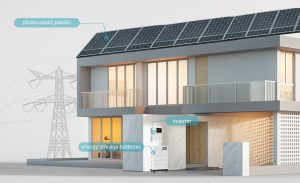
The inverter converts your panels’ DC power into AC for your home, and its size is limited by your network. On a standard single-phase home in both SA and Victoria, the inverter is generally capped at around 10 kW. Under industry design rules, panels can total up to 133% of the inverter’s rating. That’s why common packages are:
- 6.6kW of panels on a 5 kW inverter
- 10kW of panels on an 8–10 kW inverter
- 13.2kW of panels on a 10 kW inverter
Export limits are separate. SA Power Networks offers a fixed export limit (0–1.5 kW per phase) or Flexible Exports up to 10 kW per phase. Most Victorian distributors approve up to 5 kW of exports per phase, with lower limits in constrained areas. A larger system that can’t export much still pays off if you use or store the extra energy. Three-phase homes can usually go larger.
6.6kW vs 10kW vs 13kW: which is right for you?
| 6.6kW | 10kW | 13.2kW | |
|---|---|---|---|
| Average daily output, Adelaide | ~25–28 kWh | ~38–42 kWh | ~50–55 kWh |
| Average daily output, Melbourne | ~22–24 kWh | ~33–37 kWh | ~44–49 kWh |
| Typical price, Adelaide (after STCs) | ~$5,800–$7,200 | ~$8,400–$10,000 | ~$10,500–$13,500 |
| Typical price, Melbourne (after STCs, before state rebate) | ~$6,200–$7,300 | ~$8,900–$10,400 | ~$11,200–$13,700 |
| Best suited to | Small to medium homes, tighter budgets, limited roof space | Families using 20+ kWh a day, future battery or EV | All-electric homes, EV plus battery, large roofs |
Prices are typical October 2026 market ranges based on the Solar Choice Price Index, with 6.6kW and 13.2kW estimated from published price-per-watt figures. For a full breakdown, see solar panel costs in Adelaide for 2026. If you’re weighing the middle option, our analysis of 10kW solar output, cost and payback runs the numbers.
Is a bigger solar system always better?
Not always. With feed-in tariffs in SA and Victoria now often just a few cents per kWh, panels that only export add little value. Extra capacity pays off when you can use it: running appliances in the day, charging an EV, heating water or filling a battery. Free midday power plans such as Solar Sharer (SA) and the Midday Power Saver (VIC) also reduce the value of midday exports.
On the other hand, larger systems cost less per watt, and the STC discount shrinks every January until 2030. If your roof and budget allow, a modest step up now is usually cheaper than adding panels later.
Tip: Ask installers for an estimate of annual generation and your expected self-consumption for each size they quote. A good installer will show you how much of the extra output you’re likely to use.
Frequently asked questions
What size solar system do I need for a 4-bedroom house?
It depends on usage rather than bedrooms. A four-bedroom family home using 18 to 25 kWh a day typically suits a 6.6kW to 10kW system in Adelaide or Melbourne. If the home has a pool, ducted air conditioning, an EV or a battery planned, 10kW to 13kW is often a better fit.
Is a 6.6kW solar system enough?
For many households, yes. A 6.6kW system produces around 25 to 28 kWh a day on average in Adelaide and 22 to 24 kWh in Melbourne. That comfortably covers the daytime use of a typical family, but it may be too small if you add an EV, a battery or go all-electric.
Can I install more than 10kW of panels on a single-phase home?
Usually yes, up to about 13.2kW. Single-phase homes are generally limited to around 10 kW of inverter capacity, and panels can total up to 133% of the inverter rating. Your distributor must approve the connection, and exports may be limited. Three-phase homes can usually install larger systems.
Should I size my solar system for a future battery?
If a battery is likely in the next few years, it makes sense. A battery needs surplus solar to charge each day, especially in winter. Choosing 10kW or more and a hybrid or battery-ready inverter now can avoid replacing equipment later and helps the battery deliver its full savings.
Not sure where your household fits? Our installers in Adelaide and Melbourne can review your bills and roof and recommend a size that matches how you actually use power. Compare our residential solar packages, including the 13kW solar system for high-use homes, or get a free quote.
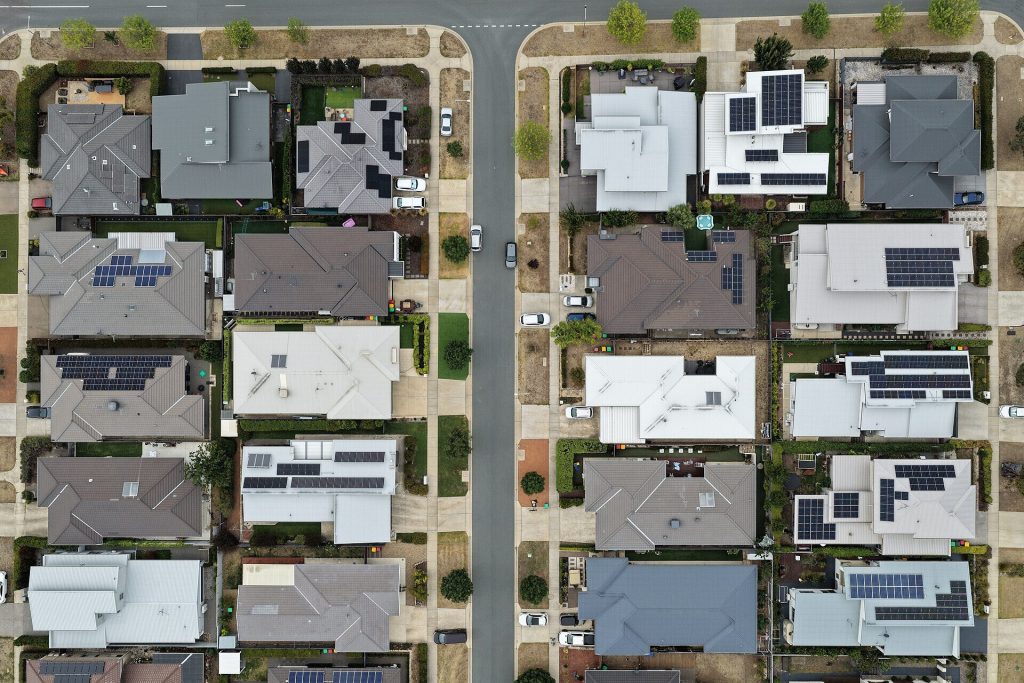
Sources: European Commission JRC – PVGIS photovoltaic performance tool (modelled October 2026, 1 kW, 22° north-facing, 14% system losses); Clean Energy Council – Consumer guides (accessed October 2026); Solar Choice – Solar Choice Price Index (1 October 2026); SA Power Networks – Flexible Exports (accessed October 2026); energy.gov.au – Solar PV and batteries (accessed October 2026). Output and price figures are estimates; your installer should model your specific roof. Featured image: Benlisquare / Wikimedia Commons, CC BY-SA 4.0.