Key points
- A time-of-use tariff charges different rates at different times. In SA and Victoria the cheapest time is now the middle of the day, and the dearest is the late afternoon and evening.
- SA Power Networks’ windows: peak 6am–10am and 4pm–midnight, solar sponge 10am–4pm, off-peak midnight–6am. Victoria’s default offer: peak 4pm–9pm, solar soak 11am–4pm, off-peak 9pm–11am.
- For solar homes, time-of-use usually wins only if you can keep evening imports low, with a battery or by shifting loads. Evening-heavy homes without a battery are often better on a flat rate.
- Run the numbers on your own smart meter data before you switch.
A time of use tariff with solar can either cut your bill or quietly raise it, depending on when your household uses power. Time-of-use pricing makes the middle of the day cheap and the evening expensive. Your panels already cover much of your midday use, so the question is how much grid power you still buy after the sun goes down. This guide sets out the 2026–27 windows and rates in SA and Victoria, compares flat and time-of-use with worked examples, and shows how to shift your usage to save.
What is a time-of-use tariff?
A time-of-use (ToU) tariff splits the day into periods with different usage rates, measured by your smart meter in 5 or 30-minute intervals. A flat-rate tariff charges the same rate at any hour.
There are two layers. Your distributor (SA Power Networks, or CitiPower, Powercor, United Energy, Jemena or AusNet in Victoria) charges your retailer a network tariff, which in both states is now usually time-of-use for homes with smart meters. Your retailer then sets the retail tariff you see on your bill. Most retailers mirror the network windows, but some use their own, so always read the plan’s Energy Price Fact Sheet.
This guide is part of our complete guide to solar savings, feed-in tariffs and bills.
Time-of-use windows and rates in South Australia
SA Power Networks’ residential time-of-use network tariff uses these windows, which have applied since 1 July 2025:
| Period | Hours (every day) | 2026–27 default offer cap (approx.) |
|---|---|---|
| Peak | 6am – 10am and 4pm – midnight | about 56c/kWh |
| Solar sponge | 10am – 4pm | about 17c/kWh |
| Off-peak | midnight – 6am | about 33c/kWh |
| Daily supply | – | about $1.80/day |
For comparison, the 2026–27 flat-rate default offer cap in the SA Power Networks area is about 42c/kWh with the same supply charge. These are maximum standing-offer prices including GST. Most SA customers can find cheaper market offers. SA Power Networks also offers an “Electrify” network tariff with a shorter 5pm–9pm peak, aimed at homes with electrified loads; ask your retailer whether a plan built on it is available to you.
The SA network also charges retailers 1c/kWh for solar exports between 10am and 4pm above a free daily allowance. We cover that in our SA feed-in tariff guide.
Time-of-use windows and rates in Victoria
From 1 July 2026 the Victorian Default Offer (VDO) moved to a three-part time-of-use structure that matches the new network tariffs. The maximum rates below include GST.
| Distributor | Peak 4pm–9pm | Solar soak 11am–4pm | Off-peak 9pm–11am | Supply/day |
|---|---|---|---|---|
| CitiPower | 38.31c | 16.59c | 21.17c | $1.2114 |
| Jemena | 37.57c | 17.65c | 21.76c | $1.2712 |
| United Energy | 40.32c | 17.26c | 22.14c | $1.1912 |
| Powercor | 41.67c | 17.26c | 22.49c | $1.3805 |
| AusNet Services | 47.64c | 17.59c | 22.60c | $1.2824 |
Flat-rate VDO usage charges range from about 26c (CitiPower) to 32c/kWh (AusNet). Victoria’s evening peak is shorter than SA’s, and the morning falls into off-peak, which makes Victorian time-of-use plans more forgiving for early risers. Free-window plans such as the Midday Power Saver add another layer; see Solar Sharer vs Midday Power Saver for that comparison.
Time of use tariff vs flat rate with solar: which is cheaper?
Here’s the trap. On a flat rate, every kilowatt-hour of solar you use yourself saves the full flat rate. On time-of-use, the solar you use at midday only saves the cheap solar sponge or solar soak rate, while every evening kilowatt-hour you import costs the peak rate. So the winner depends on your evening imports.
The examples below use 2026–27 default offer caps and assume a solar home that still imports 10 kWh a day without a battery: 5 kWh in the peak, 4 kWh off-peak and 1 kWh at midday. A battery covers 4 kWh of the peak. Supply charges are equal on both tariffs, so they’re left out.
| Household | Flat rate (per day) | Time-of-use (per day) | Better option |
|---|---|---|---|
| Adelaide, solar only | $4.19 | $4.28 | Flat, by about $33 a year |
| Adelaide, solar + battery | $2.51 | $2.03 | ToU, by about $175 a year |
| Melbourne (CitiPower), solar only | $2.60 | $2.93 | Flat, by about $120 a year |
| Melbourne (CitiPower), solar + battery | $1.56 | $1.40 | ToU, by about $59 a year |
Your result will differ, but the pattern holds: the less you import in the evening peak, the better time-of-use looks. A battery sized to cover your evening, or disciplined load shifting, usually tips the balance. Our guide to choosing the right battery size explains how to match storage to your evening use.
Tip: download 12 months of interval data and add up your imports in each window. Multiply by the rates on the plans you’re comparing. It takes 20 minutes in a spreadsheet and beats any rule of thumb. Our guide to reading your electricity bill with solar shows where to find the numbers.
How to shift your usage to save on time-of-use
The goal is simple: move flexible loads into the cheap midday window, when your own solar or cheap grid power covers them, and keep the peak as quiet as possible.
| Load | Best time in SA | Best time in VIC |
|---|---|---|
| Dishwasher, washing machine, dryer | 10am – 4pm | 11am – 4pm |
| Electric or heat pump hot water | 10am – 4pm (timer) | 11am – 4pm (timer) |
| Pool pump | 10am – 4pm | 11am – 4pm |
| EV charging | 10am – 4pm, or midnight – 6am if away | 11am – 4pm, or after 9pm if away |
| Pre-cooling or pre-heating | Early to mid afternoon, before 4pm | Early to mid afternoon, before 4pm |
| Avoid where possible | 4pm – midnight and 6am – 10am | 4pm – 9pm |
Hot water is often the single biggest win. An electric storage tank on a midday timer, or better still a heat pump, turns surplus solar into stored heat. See our guide to heat pump hot water with solar. For a longer checklist, read 15 ways to use more of your own solar power.
What about demand tariffs?
Some network tariffs add a demand charge, billed in dollars per kilowatt for your highest use during a set window, usually late afternoon and evening. If you see a kW-based charge on your bill, avoid running big loads such as the oven, dryer, air conditioner and EV charger at the same time during that window. A battery set to cover peak demand helps too. Ask your retailer which network tariff you’re assigned to; under the national rules, customers in SA can generally ask to move between the time-of-use and demand network tariffs.
Frequently asked questions
Is time-of-use better if I have solar panels?
Not automatically. Time-of-use makes midday cheap, but your panels already cover most midday use, so the cheap rate saves you less. It pays off when you keep evening imports low with a battery or by shifting loads. Solar homes with heavy evening use and no battery are often better on a flat rate.
Can I switch back to a flat rate after getting a smart meter?
Usually, yes. Many retailers in SA and Victoria still sell flat-rate plans, and the Victorian Default Offer includes both flat and time-of-use options. Your network tariff may stay time-of-use behind the scenes, but your retail plan can be flat. Check with your retailer, as availability varies by plan and distributor.
What is the solar sponge or solar soak period?
It’s the cheapest daytime window on a time-of-use plan, set when rooftop solar floods the grid. In SA Power Networks’ area it runs from 10am to 4pm. On Victoria’s 2026–27 default offer it runs from 11am to 4pm. Retailers use these windows to encourage you to run appliances in the middle of the day.
Do time-of-use windows change with daylight saving?
It depends on the plan. Some tariffs are set in local time, so the windows move with daylight saving from your point of view, while others are set in standard time all year, which shifts them by an hour in summer. SA’s Solar Sharer free period, for example, is fixed in local time. Check your plan’s Energy Price Fact Sheet.
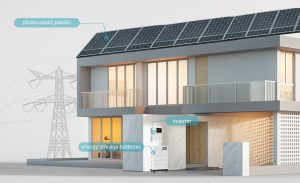
A battery is often what makes time-of-use pay for a solar home. Our installers in Adelaide and across Melbourne can size one to your evening use. Explore our solar battery systems or get a free quote.
Sources: SA Power Networks – Residential tariffs; AER – Default Market Offer 2026–27 (May 2026); Essential Services Commission – Victorian Default Offer 2026–27; AER – Solar Sharer Offer fact sheet (May 2026). SA figures are rounded default offer caps; retail rates and windows vary by plan and change each year. Featured image: Infrogmation of New Orleans / Wikimedia Commons, CC BY 2.0.