
Key points
- Victoria currently has no state battery rebate. The main support is the federal Cheaper Home Batteries Program.
- Batteries installed from 1 May to 31 December 2026 earn 6.8 STCs per kWh of usable capacity.
- On 1 January 2027 that drops to 5.7 STCs per kWh, about 16% less, and it keeps falling every six months until 2030.
- A typical 10 kWh battery attracts about 68 STCs, often worth $2,500 or more off the price.
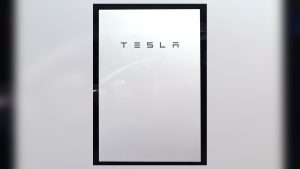
Home batteries are booming. More than 500,000 batteries had been installed under the federal Cheaper Home Batteries Program by August 2026, and Victoria already has over 45,000 households with batteries. If you’re in Victoria and thinking about adding one, here’s how the discount works in 2026, and why the timing of your install matters.
Is there a battery rebate in Victoria?
Solar Victoria’s Solar Homes Program currently focuses on solar panels, hot water and apartments. It doesn’t offer a battery rebate for owner-occupiers. Check solar.vic.gov.au for the latest status.
The good news is that the federal discount is available everywhere in Australia, including Victoria, and is generous.
How the Cheaper Home Batteries Program works
Since 1 July 2025, home and small business batteries have earned small-scale technology certificates (STCs), the same mechanism used for rooftop solar. Your installer creates the certificates and takes their value off your invoice, so the discount is upfront.
To qualify, the battery must:
- have a nominal capacity of between 5 kWh and 100 kWh
- be on the Clean Energy Council’s approved product list, with an approved inverter
- be VPP-capable, meaning able to join a virtual power plant (you don’t have to join one)
- be installed or supervised on site by a Solar Accreditation Australia (SAA) accredited installer.
The program covers new and existing solar homes, homes and businesses, and on-grid and off-grid systems.
How much is the battery discount in 2026?
The number of STCs depends on when your battery is installed and how big it is. In December 2025 the federal government lifted program funding to about $7.2 billion and changed the rules from 1 May 2026:
| Installation date | STCs per usable kWh |
|---|---|
| 1 May – 31 Dec 2026 (now) | 6.8 |
| Jan – Jun 2027 | 5.7 |
| Jul – Dec 2027 | 5.2 |
| Jan – Jun 2028 | 4.6 |
| Jul – Dec 2028 | 4.1 |
| 2029 | 3.6, then 3.1 |
| 2030 | 2.6, then 2.1 |
Larger batteries also get less support for each extra kWh:
| Usable capacity | Share of the full rate |
|---|---|
| First 14 kWh | 100% |
| 14 – 28 kWh | 60% |
| 28 – 50 kWh | 15% |
| Above 50 kWh | No STCs |
What does that mean in dollars?
STC prices move with the market. At recent prices of roughly $37–40 per certificate:
- a 10 kWh battery earns 68 STCs, about $2,500–$2,700 off
- a 13.5 kWh battery earns about 92 STCs, about $3,400–$3,700 off.
Install before 1 January 2027. When the rate drops from 6.8 to 5.7 STCs per kWh, a 10 kWh battery will lose about 11 certificates, or roughly $400 of discount. Popular installers book out late in the year, so start the conversation early.
Stacking the battery discount with other Victorian incentives
- New solar and a battery together: you can claim the federal battery STCs, the federal solar STCs and the Solar Homes solar panel rebate (up to $1,400) if you meet the $150,000 income cap. See our Victorian solar rebate guide.
- Victorian Energy Upgrades (VEU) doesn’t cover residential batteries or solar, but it does discount heat pumps, air conditioning and insulation. These all pair well with a battery.
- Midday Power Saver plans (from 1 October 2026) give free power from 11am to 2pm. A battery can charge cheaply in that window and run your home in the 4–9pm peak.
Safety and installation rules in Victoria
Home batteries in Victoria must be installed to AS/NZS 5139:2019 (including Amendment 1, published December 2025) and the wiring rules, by a registered electrical contractor and licensed electrician, and inspected by a licensed electrical inspector. Energy Safe Victoria also requires additional RCD protection. Choose an installer who handles all of this, and who also handles the STC paperwork.
Is a battery worth it?
With no minimum feed-in tariff in Victoria and evening peak prices well above 35c/kWh on many plans, storing your own solar for the evening is now usually worth more than exporting it. Combined with today’s federal discount, many households can expect a much shorter payback than a few years ago. The exact return depends on your usage, tariff and system size, so get a tailored quote.
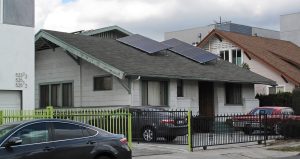
Sources: Clean Energy Regulator – Solar batteries (updated 31 Jul 2026); DCCEEW – Cheaper Home Batteries eligibility; Energy Safe Victoria – Battery energy storage systems; Energy-Storage.news (Aug 2026). Dollar figures are estimates based on recent STC prices and will vary. Featured image: Rsparks3 / Wikimedia Commons, CC0.