
Key points
- A virtual power plant (VPP) lets a retailer or aggregator use part of your home battery at peak times, in return for credits on your bill.
- Typical 2026 offers in SA and VIC: a $200 sign-up credit, then either $1/kWh during events (capped at 200–250 kWh a year) or a fixed credit of roughly $15–$45 a month or quarter.
- Batteries claiming the federal discount must be VPP-capable, but you don’t have to join one.
- In SA, the REPS VPP incentive is limited to priority households for the rest of 2026 (up to $1,030 for a 13 kWh battery).
- For most homes a VPP is worth a few hundred dollars a year. It’s a bonus, not the main reason to buy a battery.
A virtual power plant links thousands of home batteries through software so they can act like one power station. In return for letting a retailer discharge part of your battery when the grid needs it, you get sign-up credits, event payments or a better feed-in rate. In South Australia and Victoria the money is real but modest, so whether you should join comes down to the fine print: the plan’s other rates, the reserve the VPP leaves you, exit terms and your battery warranty.
What is a virtual power plant?
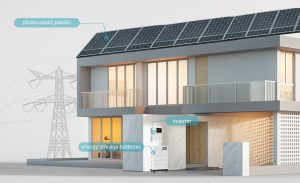
The Clean Energy Regulator describes a VPP as “a network of small, distributed energy resources” linked and controlled with smart software. In practice, your battery stays in your garage and keeps doing its normal job: storing your solar during the day and running your home at night. A few times a year, or more often on some plans, the VPP operator takes control for a short “event”, usually when wholesale prices spike or the grid is under stress on a hot evening.
During an event the operator may discharge your battery into the grid, stop it charging, or (on some plans) charge it when prices are very low. You need a permanent internet connection for this to work. Most VPPs leave a minimum charge in the battery, typically 20%, so you keep some backup power. This guide is part of our complete guide to home solar batteries in SA and Victoria.
How do VPPs pay you?
There are four main payment models, and many plans mix them:
- Sign-up credit: a one-off bill credit, commonly $200.
- Event payments: a set rate for energy the VPP uses, often $1 per kWh, usually capped each year.
- Fixed ongoing credit: a monthly or quarterly credit for being enrolled, whether or not events happen.
- Wholesale pass-through or premium export rates: you’re paid closer to the wholesale price, or a higher feed-in rate for evening exports, but you also carry more price risk.
The headline payment is only half the story. A VPP is almost always tied to the retailer’s electricity plan, so the usage rates, supply charge and feed-in tariff on that plan matter just as much.
Virtual power plant offers in SA and Victoria (2026)
The table below summarises published offers as of 3 August 2026, from SolarQuotes’ VPP comparison. Offers change often, so treat it as a starting point and confirm with the provider.
| VPP | Upfront | Ongoing payment | Reserve kept | Exit terms |
|---|---|---|---|---|
| AGL Bring Your Own Battery | $200 credit | SA $180/yr, VIC $80/yr, plus $1/kWh in events (cap 250 kWh/yr) | 20% | No exit fee |
| Origin Battery Lite (Loop) | $200 credit | $1/kWh in events (cap 200 kWh/yr) | 20% | No fixed term, no fee |
| ENGIE VPP Advantage | SA $200; VIC $300 (incl. gas credit) | About $20/month SA, $15/month VIC; up to 400 kWh/yr used | 20% for Powerwalls | No cancellation fee |
| Amber for Batteries | None | Wholesale prices; $25/month subscription | 25% or higher | No lock-in |
| Diamond Energy WATTBANK | None | $250–$450/yr credit plus 30c/kWh for exports 6pm–8am | Not specified | No lock-in |
| GloBird ZEROHERO | None | Free power 12pm–3pm; event payments on some versions | You set it | No VPP term |
| ShineHub | Discount on a ShineHub system | $1/kWh, up to $300/yr | 10% | Exit fee from $2,000, reducing |
Compatibility varies. AGL lists Tesla, LG, SolarEdge, AlphaESS, Sungrow and Sigenergy batteries, while some plans only accept one or two brands. If you’re still choosing hardware, check which VPPs support each brand before you buy.
Tip: Offers come and go. Tesla’s own Energy Plan VPP closed to all customers on 30 September 2025, for example. Don’t buy a battery because of one VPP offer; buy one that works with several.
How much can a virtual power plant earn you?
Take an Adelaide household with a 13.5 kWh battery that joins AGL’s offer as published in August 2026. In the first year it gets the $200 welcome credit plus $180 in quarterly credits. If the VPP used the full 250 kWh cap at $1/kWh, that would add up to $250, but the number of events varies a lot. SolarQuotes readers have reported very few events in some years. A realistic first-year range is roughly $380 to $630, and less from year two once the welcome credit is gone.
A fixed-credit plan like ENGIE’s in SA works out to about $200 plus roughly $240 a year, with fewer surprises. Wholesale plans like Amber can earn more in a volatile year and less in a calm one, after the subscription fee.
Compare that with the battery’s main job. Storing your own solar instead of exporting it for a few cents and buying it back at 35c or more is usually worth far more each year than any VPP payment. Our guide to whether a solar battery is worth it runs those numbers. And because many VPPs come bundled with a specific plan, also check how they compare with free-midday plans in our Solar Sharer vs Midday Power Saver guide.
The SA REPS VPP incentive in 2026
South Australia has no state battery rebate, but the Retailer Energy Productivity Scheme (REPS) funds an incentive for connecting a battery to an approved VPP. According to SolarQuotes (updated 10 June 2026), general funding ran out in May 2026. For the rest of 2026 it is only available to priority group households.
| Usable battery size | Priority households (up to) | General households (up to, when funded) |
|---|---|---|
| 13 kWh | $1,030 | $670 |
| 28 kWh (maximum) | $2,050 | $1,560 |
Priority households include Commonwealth pensioner concession and health care card holders, people receiving an energy bill concession, customers on a retailer hardship program or payment plan, tenants paying $500 a week or less, and people referred by a SAFCA member. There’s one claim per address, and the battery must be connected to an eligible VPP such as AGL, Amber, ENGIE, GloBird ZeroHero, Localvolts, Nectr, Origin Loop or Powwow. New general funding is expected in 2027 but isn’t guaranteed. Our Cheaper Home Batteries Program guide for SA explains how this sits alongside the federal discount.
Do you have to join a VPP to get the battery discount?
No. Under the federal Cheaper Home Batteries Program, a grid-connected battery and its inverter must be VPP-capable to earn the discount. The Clean Energy Regulator is clear that “you don’t have to participate in a VPP”. You can join when the battery is installed, later, or never. Victoria has no state battery rebate for owner-occupiers, so the federal discount is the main support there; see our guide to battery rebates in Victoria.
The fine print: risks to check before you join
Your battery warranty
The CER advises checking how VPP discharging could affect your warranty. Some warranties treat VPP use differently from normal self-use. Tesla’s Australian Powerwall warranty, for example, allows unlimited cycles for solar self-consumption, time-based control and backup, but caps throughput at 37.8 MWh for other uses. Ask the VPP operator and the manufacturer, in writing, whether their program affects your cover.
The plan, not just the payment
A $200 credit doesn’t help if the plan’s usage rates are 5c/kWh higher than the best offer you could get elsewhere. Compare the whole bill on Energy Made Easy (SA) or Victorian Energy Compare (VIC) with and without the VPP.
Reserve and backup
If backup matters to you, choose a VPP that keeps at least 20% in the battery, or lets you set your own reserve. On a stormy night you want that charge for your fridge and lights. Our guide to solar battery backup in a blackout covers how to set this up.
Lock-in and exit fees
Most bring-your-own-battery VPPs have no exit fee. Bundled deals where you got a discount on the hardware usually do, sometimes thousands of dollars on a sliding scale.
Questions to ask before you join a VPP
- Which battery and inverter models are compatible, and is mine on the list?
- How low will you discharge my battery, and can I set my own reserve?
- Roughly how many events happened last year, and how long did they last?
- Is the payment capped each year? Is the sign-up credit a one-off?
- What are the plan’s usage rates, supply charge and feed-in tariff?
- Does joining affect my battery warranty?
- Is there a minimum term or exit fee?
- Can you charge my battery from the grid, and at what price?
Solar Victoria suggests similar questions in its own VPP guide. Our installers in Adelaide and Melbourne can tell you which VPPs work with the battery you’re considering before you buy.
Frequently asked questions
Is joining a virtual power plant worth it?
For most households, a VPP is worth a few hundred dollars a year if you pick a plan with competitive rates, a decent reserve and no exit fee. It’s a useful bonus on top of the main savings from using your own solar at night, but it rarely changes whether a battery is worth buying in the first place.
Will a VPP drain my battery and leave me without power?
Most VPPs keep a minimum reserve, commonly 20% (25% on Amber and 10% on ShineHub, per SolarQuotes in August 2026). Events are usually short and happen at peak times. If backup is important to you, choose a plan with a higher reserve or one that lets you set your own, and ask how many events ran last year.
Can I leave a VPP if I don’t like it?
Usually, yes. Most bring-your-own-battery VPPs in SA and Victoria have no fixed term and no exit fee, though some ask for 20 business days’ notice. Deals that gave you a discount on the battery itself often have exit fees that reduce over time. Always read the termination clause before signing.
Do I need a VPP to get the federal battery rebate?
No. Your battery and inverter must be VPP-capable to earn the federal Cheaper Home Batteries discount, but the Clean Energy Regulator confirms you don’t have to join a VPP. You can join at installation, later on, or not at all. In SA, the separate REPS incentive does require you to join an approved VPP.
Thinking about a battery and want to keep your VPP options open? Our team installs VPP-capable batteries from Tesla, Sigenergy, Sungrow, AlphaESS and GoodWe. See our solar battery system installation page or get a free quote.
Sources: Clean Energy Regulator – Virtual power plants (updated 14 Jul 2026); Clean Energy Regulator – Solar batteries (updated 31 Jul 2026); SolarQuotes – VPP comparison (3 Aug 2026); SolarQuotes – SA VPP REPS rebate (10 Jun 2026); Solar Victoria – How does a virtual power plant work?; CHOICE – Should you join a virtual power plant? (17 Sep 2026). VPP offers, payments and REPS funding change often; confirm current terms with the provider before signing. Featured image: Yan lance / Wikimedia Commons, CC0.