Key points
- Solar self-consumption is the share of your solar power you use at home instead of exporting. In 2026 it’s the main driver of solar savings.
- An exported kWh earns about 0–8c. The same kWh used at home saves 17–59c, depending on your tariff and the time of day.
- Homes without a battery commonly use around 25–40% of their solar. Timers, hot water and smarter habits can lift that a long way.
- Lifting self-consumption from 30% to 50% on a 6.6kW system is worth roughly $430–$620 a year in our worked examples.
Solar self-consumption is simply how much of your own solar power your home uses directly. With feed-in tariffs now worth only a few cents in SA and Victoria, every kilowatt-hour you use instead of export is worth several times more. Below are 15 practical ways to use more of your own solar, starting with free changes and working up to hot water upgrades and batteries.
What is solar self-consumption, and why does it matter now?
When your panels produce more than your home is using, the surplus goes to the grid. When they produce less, you import the difference. Self-consumption is the solar you use on the spot. Here’s what one kilowatt-hour of solar is worth in 2026:
| What happens to 1 kWh of solar | Approximate value (SA) | Approximate value (VIC) |
|---|---|---|
| Exported to the grid | 0–8c (feed-in tariff) | 0–8c (feed-in tariff) |
| Used at midday on a time-of-use plan | about 17c saved | about 17c saved |
| Used instead of flat-rate power | up to about 42c saved | about 26–32c saved |
| Stored and used in the evening peak | up to about 56c saved | about 38–48c saved |
Savings figures are based on 2026–27 default offer caps; market offers are usually a little lower. In SA, the network also charges retailers 1c/kWh for midday exports above a free daily allowance, and both states now limit how much you can export (see our explainers on SA Power Networks flexible exports and solar export limits in Victoria). This guide is part of our guide to solar savings, feed-in tariffs and bills.
How much of my solar am I using now?
Take total generation from your inverter app for a quarter and subtract the exports shown on your bill for the same period. Divide the result by generation. For example, 3,000 kWh generated and 1,900 kWh exported means 1,100 kWh used at home, a self-consumption rate of about 37%. Homes that are empty during the day often sit at 20–30%, while families at home or with a pool can reach 50% or more without a battery.
Free and easy: change when you use power (ways 1–5)
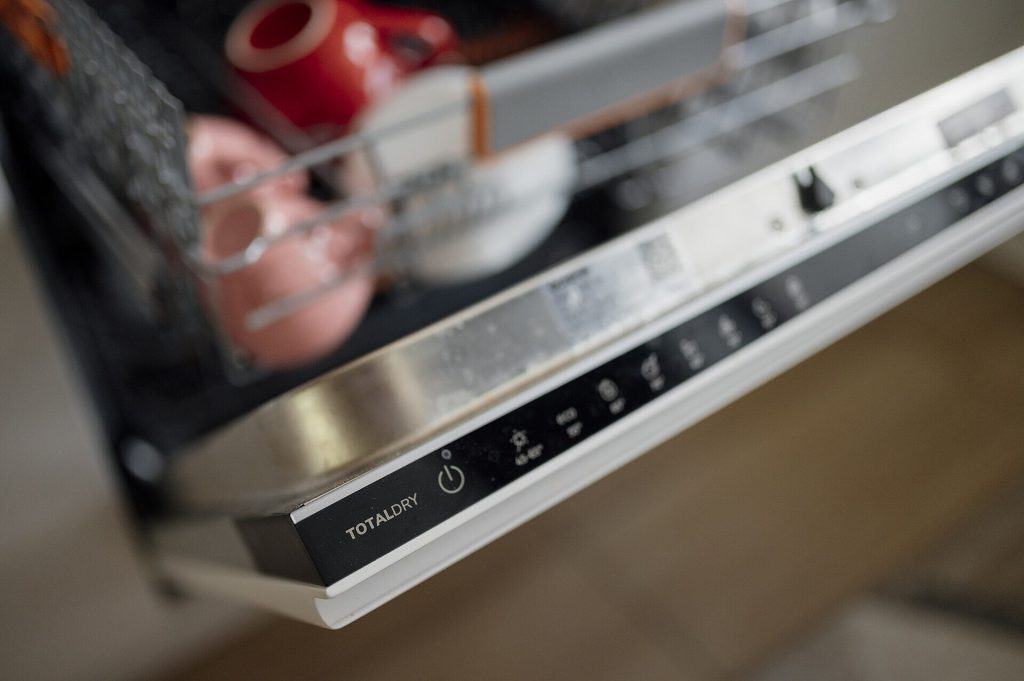
- Put the dishwasher on delay start. Load it after breakfast and set it to start around 11am. A cycle uses roughly 1–1.5 kWh.
- Do the washing in the middle of the day. Most machines have a delay timer. A cold wash uses a fraction of a hot one.
- Dry clothes while the sun shines. Better still, use the line. If you need a dryer, a heat pump dryer uses roughly half the energy of a vented one.
- Pre-cool or pre-heat before 4pm. Run reverse-cycle air conditioning in the early afternoon so the house is comfortable before the evening peak. Close blinds to hold the temperature.
- Cook and charge in daylight. Slow cookers, bread makers, e-bikes, power tools and laptops can all run or charge at midday.
Our guide to time-of-use tariffs and solar lists the cheapest and dearest windows for SA and Victoria, so you know which hours to target.
Move your big loads to solar (ways 6–10)
- Put electric hot water on a midday timer. A storage tank with a 3.6 kW element is a giant solar sponge. In SA Power Networks’ area the controlled load tariff now includes a 9:30am–4:30pm solar sponge window. Ask an electrician whether your tank’s timer or controlled-load setup can be changed.
- Upgrade to heat pump hot water. A heat pump uses roughly a third of the electricity of a conventional electric tank and runs easily on midday solar. Read more about heat pump hot water with solar, including rebates.
- Run the pool pump and chlorinator during the day. A typical pump uses 4–8 kWh a day in summer, which is a lot of solar to soak up.
- Charge your EV from solar. An EV uses roughly 15 kWh per 100 km. A solar-aware charger can follow your surplus so you charge on sunshine rather than grid power.
- Use free midday grid power if it suits you. If your solar can’t cover a big load, a free-window plan may. Compare the options in Solar Sharer vs Midday Power Saver.
| Load | Typical energy use (estimate) | Best time |
|---|---|---|
| Dishwasher | 1–1.5 kWh per cycle | Late morning |
| Washing machine | 0.3–2 kWh per load (cold to hot) | Late morning |
| Clothes dryer | 2–4 kWh per load (vented) | Midday |
| Electric storage hot water | 6–10 kWh a day for a family | Midday timer |
| Heat pump hot water | 2–4 kWh a day | Midday timer |
| Pool pump | 4–8 kWh a day | 10am–4pm |
| EV (40 km a day) | about 6 kWh a day | Midday |
Figures are typical ranges and vary widely by model, size and season. Check your appliance’s energy label or manual for real numbers.
Use smart controls (ways 11–13)
- Fit a solar diverter. A diverter sends surplus solar to your hot water element automatically, rather than exporting it.
- Use smart plugs and schedules. Cheap smart plugs or your inverter’s load-control feature can switch on heaters, dehumidifiers or pumps when there’s spare solar.
- Watch your monitoring app. Most inverters show live generation and consumption. A week of checking shows you when you’re exporting and what you could move.
Store it or reshape it (ways 14–15)
- Add a battery. A battery stores midday surplus for the evening peak, which is where solar is worth most. It’s the biggest single step up in self-consumption, often lifting it to 70–90%. The federal battery discount is at its highest for installs until 31 December 2026. If you already have panels, see adding a battery to existing solar.
- Rethink panel direction when you expand. East and west-facing panels produce less at noon but more in the morning and late afternoon, closer to when households use power. If you’re adding panels, ask your installer to model a west-facing array.
How much can higher self-consumption save?
Here’s a worked example for a 6.6kW system lifting self-consumption from 30% to 50%. We assume annual generation of about 10,300 kWh in Adelaide (4.3 kWh per kW per day) and 8,900 kWh in Melbourne (3.7 kWh per kW per day), and that each extra kWh used at home replaces grid power instead of earning a feed-in credit.
| City | Extra solar used at home | Value per kWh (grid rate minus feed-in) | Extra saving per year |
|---|---|---|---|
| Adelaide | about 2,060 kWh | 35c − 5c = 30c | about $620 |
| Melbourne | about 1,780 kWh | 28c − 4c = 24c | about $430 |
Your numbers depend on your tariff, feed-in rate and which grid hours you displace. Displacing evening peak imports is worth more; displacing cheap midday imports is worth less.
Frequently asked questions
What is a good solar self-consumption rate?
Without a battery, around 30–50% is good for most homes, and families who are home during the day can do better. With a well-sized battery, 70–90% is common. The right target depends on your system size: a large system will naturally export more, which is fine because extra panels are cheap.
Is it better to use my solar or export it?
In SA and Victoria in 2026, using it is almost always better. Feed-in tariffs pay around 0–8c per kWh, while every kWh you use at home avoids buying power at 17–59c. The only exception is when you’d be using power you don’t need just to soak up solar.
Should I run my hot water on solar or off-peak?
For most solar homes, solar is better. Heating water at midday uses your own surplus, which would otherwise earn only a few cents as exports. Overnight off-peak rates in SA are now dearer than the midday solar sponge rate. Ask an electrician to set a timer or change the controlled load arrangement.
Does a bigger solar system increase self-consumption?
A bigger system increases the amount of solar you use, especially on cloudy days and in winter, but your self-consumption percentage usually falls because you export more on sunny days. That’s still worthwhile when panels are cheap. Judge a system by total savings, not by the percentage alone.
Want to push your self-consumption further? Our Adelaide and Melbourne team can review your monitoring data and recommend timers, hot water or storage. See our solar battery systems or get a free quote.
Sources: SA Power Networks – Residential and controlled load tariffs; AER – Default Market Offer 2026–27; Essential Services Commission – Victorian Default Offer 2026–27; energy.gov.au – Solar PV and batteries. Appliance figures are typical estimates; tariffs change regularly. Featured image: Shixart1985 / Wikimedia Commons, CC BY 2.0.