Key points
- An electricity bill with solar shows two flows: power you bought from the grid (imports) and power you sent to the grid (exports, paid as a feed-in credit).
- Your bill does not show how much solar you generated or used yourself. You need your inverter app for that.
- Check five things each quarter: supply charge, import kWh by time period, export kWh, feed-in rate and any daily cap, and whether reads are actual or estimated.
- With feed-in rates of around 0–8c/kWh in 2026, the import lines matter far more than the solar credit.
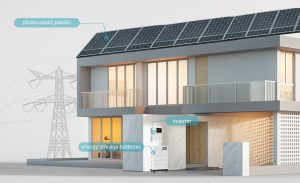
Reading an electricity bill with solar is confusing because the bill only sees what crosses your meter. It records the energy you import from the grid and the energy you export, but not the solar power your home uses directly. Once you know which line is which, your bill becomes a useful tool for checking that your system is working and that you’re on the right plan.
Why does my electricity bill with solar look different?
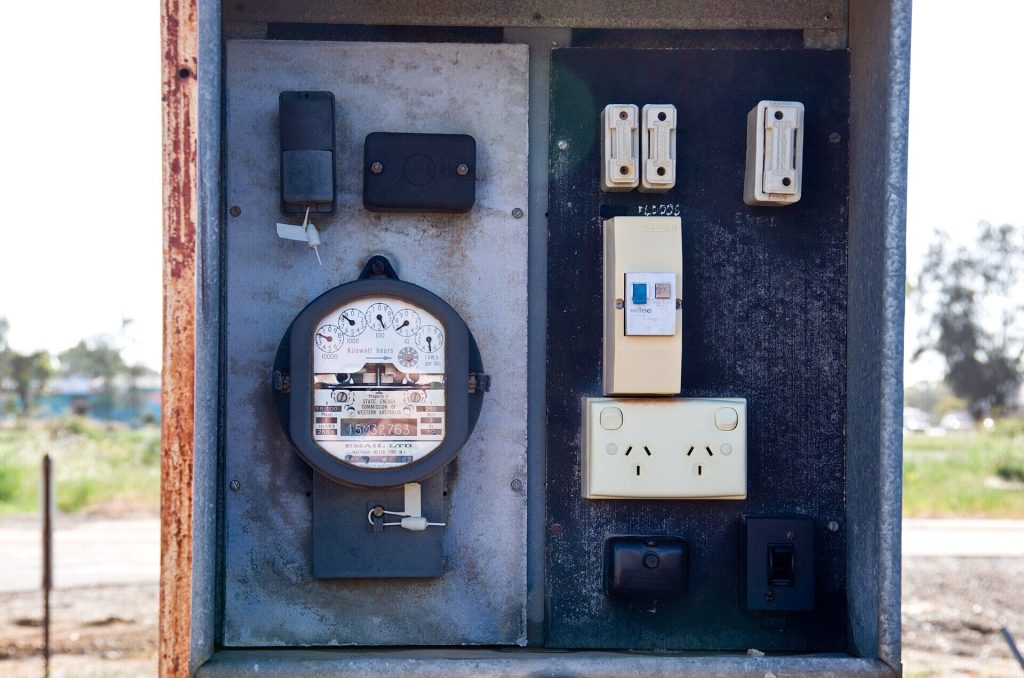
A solar home has a bi-directional (two-way) smart meter. It measures two separate things every 5 or 30 minutes:
- Imports: electricity you draw from the grid when your panels aren’t producing enough, such as at night or on cloudy days.
- Exports: surplus solar your home didn’t use, which flows out to the grid and earns a feed-in tariff.
Solar that you use the moment it’s produced never passes through the meter as an import or export, so it never appears on the bill. That “invisible” solar is where most of your savings come from. This guide is part of our guide to solar savings, feed-in tariffs and power bills.
The first page: summary, billing period and better offer message
Page one gives you the amount due, the due date, the billing period and a summary of charges and credits. Look for:
- Billing period and number of days. Compare bills by cost per day, not total, because quarters vary from about 88 to 93 days.
- Average daily usage. This is grid imports only. A solar home’s figure should be well below a similar home without solar.
- The better offer message. Under the AER’s Better Bills Guideline, retailers in SA must tell you at least every 100 days whether a cheaper plan is available based on your past 12 months of use. Victorian bills carry a similar “best offer” message under Essential Services Commission rules. If it says you could save, act on it.
Finding your NMI and meter details
Your NMI (National Meter Identifier) is a 10 or 11 character code that identifies your property’s connection point. You need it to compare plans on Energy Made Easy (SA) or Victorian Energy Compare, to request your smart meter data, and when your installer applies to connect new solar or a battery.
The bill also lists your meter number and whether reads were actual or estimated. Smart meters are read remotely, so estimates should be rare. If you see an estimate, ask why, because an estimated export read can understate your feed-in credit.
Supply and usage charges: what you pay for
Daily supply charge
A fixed cents-per-day fee for being connected, no matter how much solar you produce. In SA the 2026–27 default offer cap is about $1.80 a day, and in Victoria the default offer ranges from about $1.19 to $1.38 a day depending on your distributor. Market offers are often lower. Solar can’t reduce this charge, which is why a $0 bill is hard to reach without a battery.
Usage charges by time period
On a flat rate you’ll see one usage line (sometimes split into blocks). On a time-of-use plan you’ll see separate lines for peak, off-peak and a midday “solar sponge” or “solar soak” period, each with kWh and a cents-per-kWh rate. A controlled load line covers a separately metered circuit, usually an off-peak hot water system. Our guide to time-of-use tariffs with solar explains each window in SA and Victoria.
The solar feed-in credit: how exports are paid
Exports appear as a credit, usually labelled “solar feed-in”, “export” or “generation”. Some bills show the meter register code too: imports are often marked E1 and exports B1. Check these three details:
- The rate. SA and Victoria have no minimum feed-in tariff in 2026. Retailer rates typically run from 0c to about 8c/kWh. See our breakdowns of SA feed-in tariffs and Victoria’s feed-in tariff.
- Any daily cap or tiers. Many plans pay the higher rate only on the first 8–14 kWh a day and a lower rate after that, so you may see two export lines.
- Legacy schemes. Early SA systems on the old 44c distributor scheme, which ends on 30 June 2028, usually see that credit on its own line.
Households that aren’t registered for GST don’t receive GST on feed-in credits, while supply and usage charges include GST. That’s normal.
Worked example: an Adelaide summer bill
Here’s a simplified 91-day bill for a home with a 6.6kW system on a time-of-use market offer. Rates are illustrative, include GST and aren’t any particular retailer’s.
| Line item | Quantity | Rate | Amount |
|---|---|---|---|
| Daily supply charge | 91 days | $1.25/day | $113.75 |
| Peak usage (6am–10am, 4pm–midnight) | 520 kWh | 45c | $234.00 |
| Off-peak usage (midnight–6am) | 180 kWh | 30c | $54.00 |
| Solar sponge usage (10am–4pm) | 90 kWh | 15c | $13.50 |
| Solar feed-in credit | 1,900 kWh | 5c | −$95.00 |
| Total | $320.25 |
What this bill tells you:
- Peak imports are the biggest cost. 520 kWh at 45c costs more than twice what the 1,900 kWh of exports earned. Moving just 2 kWh a day out of the evening peak would save roughly $55–$75 a quarter, depending on whether your own solar or cheap solar sponge power covers it.
- Exports are worth little. Each exported kWh earned 5c, while each peak kWh cost 45c.
- The bill can’t show self-consumption. If the inverter app says the system produced 3,000 kWh, then 3,000 − 1,900 = 1,100 kWh was used directly in the home, about 37% of generation. Lifting that share is the fastest way to cut this bill. Our list of ways to use more of your own solar shows how.
Why is my bill still high with solar?
- Most of your use is at night. Solar can’t help after sunset without a battery.
- Your feed-in rate dropped. Retailers can change rates with notice, and minimum tariffs have gone in both states.
- Your tariff changed. A switch from flat rate to time-of-use, often after a smart meter upgrade, can raise bills for evening-heavy homes.
- Exports fell suddenly. Compare export kWh with the same quarter last year. A big drop can point to a faulty inverter, a tripped isolator or shading. Our guides to monitoring your solar system and common solar problems can help you check.
- New appliances. A pool, an EV, electric heating or a second fridge all add up.
Tip: download your smart meter interval data from your retailer or distributor. It shows exactly when you import and export, half-hour by half-hour, and you can upload it to Victorian Energy Compare or use your NMI on Energy Made Easy to compare plans on your real usage.
Frequently asked questions
Why doesn’t my bill show how much solar I generated?
Your retailer’s meter only measures power crossing the grid connection: imports and exports. Solar used inside your home at the moment it’s produced never reaches the meter. To see total generation, check your inverter display or monitoring app, then subtract the exports on your bill to estimate how much solar you used yourself.
What do E1 and B1 mean on my electricity bill?
They’re meter register or data stream codes. E1 usually refers to general electricity imported from the grid, and B1 usually refers to energy exported to the grid, such as surplus solar. Some bills also show a separate code for a controlled load circuit. Retailers label these differently, so check the bill’s glossary.
Why is my feed-in credit lower than my neighbour’s?
Feed-in credits depend on your retailer’s rate, any daily cap, your system size and orientation, and how much power your household uses during the day. A home that uses more of its own solar exports less, which usually means a lower credit but a smaller bill overall. Compare total bills, not credits.
Should I be worried about an estimated read on a solar bill?
Estimates are uncommon with smart meters, but they happen when data fails to transfer. An estimate can understate exports or overstate imports. Ask your retailer for an actual read or a corrected bill. If estimates keep happening, ask the retailer or your distributor to check the meter’s communications.
If your bill hasn’t dropped as much as you expected, our Adelaide and Melbourne team can check your system’s output and suggest whether a plan change, a battery or more panels would help. See our home solar packages or get a free quote.
Sources: AER – Solar Sharer Offer fact sheet (Better Offer check) (May 2026); AER – Default Market Offer; Essential Services Commission – Victorian Default Offer 2026–27; Energy Made Easy; Victorian Energy Compare; SA Power Networks – Residential tariffs. Example rates are illustrative only; check your own plan’s Energy Price Fact Sheet. Featured image: Gnangarra / Wikimedia Commons, CC BY 2.5 AU.