
Key points
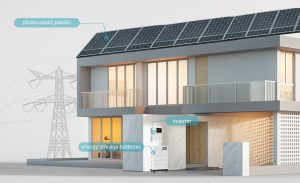
- Home electrification means replacing gas (and petrol) with efficient electric appliances: a heat pump for hot water, reverse-cycle air conditioning for heating, induction for cooking and, eventually, an EV.
- Heat pumps and reverse-cycle units are 300–600% efficient, so rooftop solar can power much of an all-electric home during the day.
- The Victorian Government estimates a new all-electric home saves about $880 a year, or $1,820 with solar. Dropping the gas supply charge alone is often worth several hundred dollars a year.
- Victoria offers the most help in 2026: up to $2,030 off an eligible locally made heat pump, VEU discounts and the Solar Homes rebate. SA has REPS discounts and free midday power under Solar Sharer.
- You don’t need to do it all at once. Replace gas appliances as they wear out, starting with the ones that use the most gas.
Home electrification is the process of running your whole home on electricity, ideally from your own rooftop solar, instead of gas. For households in Adelaide and Melbourne it’s now one of the most reliable ways to cut energy bills: efficient electric appliances use far less energy than gas, solar supplies much of that energy for a few cents a kilowatt-hour, and once your last gas appliance goes you stop paying the gas supply charge. This guide brings together everything you need to plan the switch in 2026, with links to our detailed guides on each step.
What is home electrification?
Energy.gov.au describes electrification, or going “all-electric”, as replacing products and appliances that use non-electric fuels, like gas or petrol, with electric technologies. In a typical home there are three main areas:
- Hot water, which energy.gov.au says accounts for around 25% of an average household’s energy use.
- Heating and cooling, which can account for 20% to 50% of household energy use depending on the climate.
- Cooking, a smaller share of energy use but often the last thing keeping a home on gas.
Transport is the fourth piece. An electric vehicle charged at home turns petrol spending into electricity use, and with solar that electricity can be very cheap.
The benefits go beyond the bill. All-electric homes avoid burning gas indoors, produce fewer emissions as the grid gets cleaner, and pair with solar and batteries for resilience. Victoria has also set firm dates: new homes must be all-electric from 1 January 2027, and gas hot water that reaches the end of its life must be replaced with an electric system from 1 March 2027.
Why solar makes electrification pay
Electric appliances on their own are already cheaper to run than gas for most uses. Add solar and the gap widens, for three reasons.
1. Heat pumps multiply every kilowatt-hour
Heat pump hot water systems and reverse-cycle air conditioners move heat rather than create it. Energy.gov.au puts reverse-cycle air conditioners at 300% to 600% efficient, and says heat pump water heaters use about 30% of the energy of a conventional electric hot water system. One kilowatt-hour of solar can deliver three or more kilowatt-hours of heat.
2. Exporting solar earns very little
Feed-in tariffs in SA are typically 0–8c/kWh, and Victoria has had no minimum feed-in tariff since 1 July 2025. When you export, you sell power for a few cents and buy it back at night for 30–45c. Every kilowatt-hour you use at home instead, in a heat pump, an air conditioner or an EV, is worth several times more than exporting it. Our guide to feed-in tariffs and bills explains the economics.
3. Free and cheap midday power
From 1 July 2026, Solar Sharer offers free power from 12pm to 3pm in SA, and from 1 October 2026 Midday Power Saver offers free power from 11am to 2pm in Victoria, each capped at 24 kWh a day with a smart meter. All-electric homes are well placed to use these windows: hot water, pre-heating or pre-cooling, and EV charging can all be scheduled into the middle of the day.
Tip: The common thread is timing. Heat your hot water, pre-cool or pre-heat the house and charge the car between about 10am and 3pm, and most of your electricity can come from your roof or a free window.
Home electrification at a glance
Typical 2026 costs and incentives for each upgrade. Prices are indicative market ranges, not Solar Beat quotes, and incentives change, so check current rules before you buy.
| Upgrade | Typical 2026 cost | Main incentives | How it uses solar |
|---|---|---|---|
| Heat pump hot water | About $3,000–$6,000 installed before state discounts | Federal STCs (about $400–$650 in 2026); VIC: Solar Victoria rebate + VEU, up to $1,630 ($2,030 locally made); SA: REPS discounts | Runs on a timer in the middle of the day; the tank stores the heat |
| Reverse-cycle air conditioning | Varies with size and number of rooms; ducted costs much more than splits | VIC: VEU discounts, including replacing gas ducted heating; SA: some REPS offers | Pre-cool or pre-heat during the day; a battery covers evenings |
| Induction cooktop | $599–$5,549 for models in CHOICE’s latest test, plus a dedicated circuit | VIC: VEU discounts when replacing gas or older electric cooktops | Daytime and weekend cooking; battery for dinner |
| EV charger (7kW single-phase) | About $1,200–$2,500 installed | No state EV purchase rebates in SA or VIC; federal FBT exemption for eligible EVs | Solar-aware chargers follow your surplus |
| Bidirectional (V2G) charger | Reported from around $10,000 | Mostly through retailer trials | Car battery stores solar for the evening |
| Gas abolishment (VIC) | $244 + GST at Multinet in 2026–27, plus any retailer fee | Upfront fee kept low under current Victorian arrangements | Ends the daily gas supply charge |
| Solar panels (6.6kW) | About $4,500–$8,000 after STCs | Federal STCs; VIC: Solar Homes rebate up to $1,400 | The energy source for everything above |
| Home battery | About $700–$1,300 per usable kWh before the discount | Cheaper Home Batteries Program: 6.8 STCs per kWh until 31 Dec 2026 | Moves midday solar into the evening peak |
Hot water: start with a heat pump
Hot water is usually the best first step. A heat pump for a typical family needs only about 3–5 kWh of electricity a day, which a modest solar system covers easily if the heat pump runs on a timer in the middle of the day. The tank acts like a thermal battery, holding the heat until the evening.
In Victoria, eligible owner-occupiers can combine the Solar Victoria hot water rebate (up to $1,000, or $1,400 for locally made products) with a VEU discount, for up to $1,630 off, or $2,030 for a locally made system. Federal STCs apply in both states, though their value drops on 1 January 2027 as the scheme winds down. In SA, retailers delivering the Retailer Energy Productivity Scheme (REPS) offer point-of-sale discounts on efficient water heaters, with larger offers for priority groups.
In our worked examples, an Adelaide family replacing an old electric storage heater could save around $1,000 a year, and a Melbourne household replacing gas storage around $550 a year, plus the supply charge if hot water was the last gas appliance.
Read more: Heat pump hot water with solar: costs, rebates and savings in SA and VIC. If you’re in Victoria and still on gas hot water, also see Victoria’s gas phase-out and the 2027 hot water rules.
Heating and cooling: reverse-cycle air conditioning
Heating is usually the biggest gas user in a home, so replacing gas heating brings the biggest gas savings. Energy.gov.au says reverse-cycle split systems are the preferred replacement for gas heaters, as they’re more efficient, cheaper to run and handle cooling too.
In our Melbourne example, heating a living area through winter cost about $620 a season with ducted gas, about $260 with a reverse-cycle split on grid power, and about $145 with half the power from solar or a battery. Summer cooling lines up neatly with solar: start the air conditioner early in the afternoon while output is strong, and let it coast into the evening.
Winter is harder, because heating demand peaks in the morning and evening when solar is weak. Insulation, pre-heating in the afternoon, a battery and free midday windows all help. In Victoria, VEU discounts apply to efficient reverse-cycle systems, including when replacing gas ducted heating, and from 1 October 2026 ceiling insulation discounts are open to all eligible homes.
Read more: Running reverse-cycle air conditioning on solar: heating and cooling costs.
Cooking: switching from gas to induction
Induction cooktops heat the pan directly with a magnetic field. They’re faster and easier to control than most gas burners, don’t release combustion gases into the kitchen, and are easy to clean. Most need a dedicated 20A to 42A circuit installed by a licensed electrician, and your pans need a magnetic base.
Cooking is a small share of most energy bills, so running-cost savings are modest. The real value is that the cooktop is often the last gas appliance in the house. Replace it and you can get off gas completely. In Victoria, VEU discounts apply to induction cooktops replacing gas.
Read more: Switching from gas to induction cooking: costs, savings and what to know.
Electric vehicles: charging from your roof
An EV driven 12,000 km a year needs about 2,000 kWh, or 5–6 kWh a day. That’s roughly a fifth of what a 6.6kW system produces on an average day in Adelaide. Charged from your own solar, the energy costs only the feed-in tariff you give up, about $80 a year in our example, compared with roughly $1,750 for a petrol car.
A 7kW single-phase wallbox costs about $1,200–$2,500 installed in 2026. Solar-aware models adjust their charge rate to your surplus, and single-phase chargers can soak up solar from as little as about 1.4 kW. In SA, hard-wired home chargers must be demand-response capable and on the Technical Regulator’s compliance list. Neither state offers an EV purchase rebate in 2026, but the federal electric car FBT exemption continues for eligible EVs until 31 March 2027, with changes announced from April 2027.
Read more: EV charging with solar at home: chargers, costs and setup.
Vehicle-to-grid: the car as a home battery
With a bidirectional charger, an EV’s 50–80 kWh battery can power your home in the evening or export to the grid. In 2026 it’s approved but early. Only a handful of chargers are certified, few carmakers officially support it, and most households using it are in retailer trials run by Amber, AGL and Origin. For most homes, a stationary battery remains the simpler option for now.
Read more: Vehicle-to-grid (V2G) in Australia: can your EV power your home?
Getting off gas for good
Once your last gas appliance is gone, you can stop paying for a gas connection you don’t use. The supply charge applies every day your account is open, often several hundred dollars a year. At $1.00 a day, that’s $365 a year.
In Victoria, you contact your gas retailer and ask for the connection to be abolished. The distributor (AusNet Services, Multinet Gas Networks or Australian Gas Networks) removes the meter and cuts the service pipe. Multinet’s 2026–27 residential abolishment charge is $244 plus GST, kept low because the rest of the cost is shared across gas customers. A national rule made in 2026 moves abolishment towards cost-reflective pricing after the current regulatory periods, so leaving under the current arrangements is likely to be cheaper.
Read more: How to disconnect from gas in Victoria (and stop paying the supply charge).
Rebates and rules in SA and Victoria in 2026
Victoria
- Solar Homes: solar panel rebate up to $1,400 plus an optional interest-free loan, for owner-occupiers with household income under $150,000 and property under $3 million.
- Hot water rebate: up to $1,000, or $1,400 for locally made products; up to $2,030 combined with VEU.
- Victorian Energy Upgrades (VEU): no income test; covers heat pumps, reverse-cycle air conditioning, induction cooktops and, from 1 October 2026, ceiling insulation for all eligible homes. The program runs to 2045. See our guide to Victorian Energy Upgrades discounts in 2026.
- Rules: new homes all-electric from 1 January 2027; end-of-life gas hot water replaced with electric from 1 March 2027 (repairs still allowed); rental minimum standards phase in from 1 March 2027. Owner-occupiers aren’t required to replace gas heating or cooking.
South Australia
- No state rebate for solar, batteries or heat pumps, and no rule requiring homes to leave gas.
- REPS: the second period runs from 2026 to 2030. Retailers offer discounted upgrades such as efficient water heaters and air conditioning; amounts vary by provider.
- Solar Sharer: free power from 12pm to 3pm, up to 24 kWh a day, on opt-in plans from 1 July 2026.
- EV chargers: must be demand-response capable if hard-wired.
Federal
- STCs for solar panels and heat pumps, declining each year until the scheme ends in 2030.
- Cheaper Home Batteries Program: 6.8 STCs per usable kWh for installs until 31 December 2026, then 5.7 from January 2027.
- Electric car FBT exemption for eligible EVs, with changes announced from 1 April 2027.
For the full list of solar and battery incentives, see our solar rebates guide.
What size solar and battery does an all-electric home need?
Electrifying shifts gas use onto your electricity bill, so your solar should grow with it. A rough daily budget for a four-person household going fully electric:
| Load | Approx. daily electricity |
|---|---|
| Existing appliances, lighting, fridge | 10–14 kWh |
| Heat pump hot water | 3–5 kWh |
| Reverse-cycle heating and cooling (yearly average; much higher on peak days) | 3–8 kWh |
| Induction cooking | About 1 kWh |
| EV (12,000 km a year) | 5–6 kWh |
| Total | About 22–34 kWh |
These are planning estimates, not measurements; your own bills and appliance choices will set the real figures. A 6.6kW system averages around 28 kWh a day in Adelaide and 24 kWh in Melbourne, but much of that arrives in the middle of the day and in summer. That’s why many all-electric homes choose a 10kW solar system or a 13kW system, and add a battery to carry midday solar into the evening, when heating, cooking and lighting peak.
With the federal discount, a 10 kWh battery comes off by roughly $2,500–$2,700 and a 13.5 kWh battery by roughly $3,400–$3,700 for installs before 31 December 2026. Our complete guide to home solar batteries covers sizing, and our solar battery systems page shows what we install.
Check your switchboard and supply
A fully electric home can draw a lot of power at once: an induction cooktop, a heat pump, air conditioning and an EV charger all running together. Before adding major loads, have an electrician check your switchboard, main switch and supply capacity. Planning the switchboard for everything at once usually costs less than upgrading in stages. Smart EV chargers and appliance timers can also keep peak demand down.
In what order should you electrify?
You don’t need to do everything at once. Energy.gov.au suggests replacing gas appliances as they near the end of their life, and starting with the ones that use the most gas, which in most homes is heating. A practical order for SA and Victorian homes:
- Solar first, or alongside the first upgrade. It lowers the running cost of everything that follows. If you already have an older, smaller system, consider an upgrade.
- Hot water, especially if your system is over 10 years old. Gas water heaters typically last 12 to 15 years, and in Victoria end-of-life gas units must be replaced with electric from 1 March 2027.
- Heating and cooling, with insulation and draught-proofing at the same time.
- Cooking, often timed with a kitchen renovation.
- Disconnect from gas once the last appliance is gone.
- EV and smart charging when you next replace a car, with V2G as an option later.
- Battery once your daytime loads are in place and you can see how much surplus is left for the evening.
Avoid like-for-like replacements in an emergency. When an old gas hot water system fails in winter, it’s tempting to put another gas unit in. Planning the switch ahead gives you time to compare quotes, claim rebates and line the job up with solar.
Frequently asked questions
What is home electrification?
Home electrification means replacing gas and petrol appliances with efficient electric ones: a heat pump for hot water, reverse-cycle air conditioning for heating and cooling, an induction cooktop, and eventually an electric vehicle. Paired with rooftop solar, much of the energy can come from your own roof, and you can stop paying a gas supply charge.
How much can I save by going all-electric?
It depends on your home and tariffs. The Victorian Government estimates a new all-electric home saves about $880 a year, or about $1,820 with solar. Existing homes often save several hundred dollars a year from the gas supply charge alone once the last gas appliance goes, plus lower running costs for heating and hot water.
Do I have to get rid of gas in Victoria?
Not entirely. From 1 January 2027 new homes must be all-electric, and from 1 March 2027 a gas hot water system that reaches the end of its life must be replaced with an electric one. Repairs are still allowed, and owner-occupiers aren’t required to replace gas heating or cooking. Rental properties face new minimum standards from 1 March 2027.
Is going all-electric worth it in South Australia?
Usually, yes. SA has no gas mandates, but heat pumps and reverse-cycle air conditioning are cheaper to run than gas, SA’s low feed-in tariffs make using solar at home more valuable than exporting it, and Solar Sharer offers free power from 12pm to 3pm. REPS discounts can reduce upfront costs.
Do I need a battery to go all-electric?
No. A heat pump stores solar as hot water, and timers can shift air conditioning and EV charging into daylight hours. A battery helps with the evening peak, when heating, cooking and lighting are running, and the federal discount makes one cheaper until the end of 2026. Add it once your daytime loads are in place.
All our guides on home electrification
- Heat Pump Hot Water With Solar: Costs, Rebates and Savings in SA and VIC – prices, STCs, Victorian and SA discounts, and how to run a heat pump on solar.
- Running Reverse-Cycle Air Conditioning on Solar: Heating and Cooling Costs – power use, heating costs vs gas, and pre-heating and pre-cooling tips.
- Switching From Gas to Induction Cooking: Costs, Savings and What to Know – cooktop prices, wiring, cookware and VEU discounts.
- EV Charging With Solar at Home: Chargers, Costs and Setup – charger types, solar-aware charging, costs and SA rules.
- Vehicle-to-Grid (V2G) in Australia: Can Your EV Power Your Home? – approved chargers, compatible cars, trials and V2G vs a battery.
- How to Disconnect From Gas in Victoria (and Stop Paying the Supply Charge) – disconnection vs abolishment, steps and 2026–27 fees.
- Victoria’s Gas Phase-Out: What the 2027 Hot Water Rules Mean for Your Home – the dates, what’s required and what isn’t.
- Victorian Energy Upgrades 2026: Discounts for Heat Pumps, Air Con and Insulation – how VEU works and what it covers.
Ready to plan your switch? Our Adelaide and Melbourne installers design home solar systems and batteries around the electric appliances you have now and the ones you’re planning, so you use more of what you generate. Read our local guides to solar in Adelaide and solar in Melbourne, browse all our solar guides, or get a free quote.
Sources: energy.gov.au – Electrification; energy.gov.au – Heating and cooling; Solar Victoria – Hot water rebate (updated 12 Oct 2026); Premier of Victoria – Securing Victoria’s gas supply while slashing energy bills (24 Jun 2025); AER – Multinet Gas Networks tariff schedule 2026–27; Clean Energy Regulator – Deeming period decline. Costs are indicative 2026 market ranges and savings examples use assumed tariffs; rebates and rules change, so check official sources before you buy. Featured image: Keirissa Lawson, CSIRO / Wikimedia Commons, CC BY 3.0.