Key points
- A heat pump uses about 30% of the electricity of a conventional electric storage hot water system, so a modest rooftop solar system can cover most of it.
- Run it on a timer between roughly 10am and 3pm and it heats water from your own solar, or from free power under Solar Sharer (SA, 12pm–3pm) or Midday Power Saver (VIC, 11am–2pm).
- Most homes pay about $3,000–$6,000 installed before discounts (2026 market prices). Federal STCs take a few hundred dollars off, and they shrink again on 1 January 2027.
- Eligible Victorian owner-occupiers can get up to $1,630 off ($2,030 for locally made) by combining Solar Victoria and VEU. In SA, REPS discounts come through retailers and vary.
Pairing heat pump hot water with solar is one of the cheapest upgrades an Adelaide or Melbourne household can make. A heat pump needs only around 3–5 kWh of electricity a day for a typical family, and if it runs in the middle of the day almost all of that can come from your own panels. This guide covers what a heat pump costs in 2026, the rebates in SA and VIC, how to set it up to run on solar, and what you can realistically save.
How does heat pump hot water work with solar?
A heat pump works like a fridge in reverse. A compressor and refrigerant pull heat out of the outside air and move it into the water tank. Because it moves heat rather than making it, energy.gov.au says a heat pump uses about 30% of the energy of a conventional electric hot water system. The ACT Government’s buyer’s guide puts typical efficiency at 300–400% (a “coefficient of performance”, or COP, of 3 to 4).
That low, steady load is a good match for rooftop solar. Most household heat pumps draw roughly 0.5–1.5 kW while the compressor runs, and a full reheat usually takes a few hours. A 6.6kW solar system in Adelaide produces around 28 kWh on an average day, and around 24 kWh in Melbourne, so even a small system has plenty of midday surplus to heat the tank. Warmer afternoon air also lifts its efficiency.
Hot water is one of the biggest steps in going all-electric. For the full picture, including heating, cooking and EVs, see our home electrification guide for SA and Victoria.
How much does heat pump hot water cost in 2026?
Prices vary with tank size, brand, refrigerant and site work. Typical market prices as of October 2026:
| System | Typical installed price (before state discounts) | Notes |
|---|---|---|
| Entry-level integrated heat pump, 160–270 L | $3,000–$4,500 | Usually R290 or R134a refrigerant; simple swap-out |
| Mid-range integrated, 270–315 L | $4,000–$5,500 | Most common choice for families of 3–5 |
| Premium split or CO2 (R744) system | $5,500–$8,000+ | Better cold-weather performance; quieter options |
These figures are indicative ranges from installer price guides and government buyer guides, not Solar Beat quotes. Most installers deduct the federal STC discount in the price shown, so check whether a quote is before or after STCs. Extra costs can include a new concrete pad, relocating the unit, a dedicated circuit or a switchboard upgrade on older homes.
How many STCs does a heat pump get?
Heat pumps earn small-scale technology certificates (STCs) under the federal Small-scale Renewable Energy Scheme. The method is different from solar panels. Each model on the Clean Energy Regulator’s register has a 10-year STC figure for each climate zone, which is multiplied by the remaining deeming period. For installs in 2026 the deeming period is 5 years, so a heat pump gets half its 10-year figure.
In practice, most 2026 installs in Adelaide and Melbourne land somewhere around 10–17 STCs, worth roughly $400–$650 at current STC prices of about $38–$40. From 1 January 2027 the deeming period drops to 4 years, which cuts the STC value by about a fifth, and the scheme finishes at the end of 2030. Ask your installer for the exact STC count for your model and postcode.
What rebates can you get in Victoria?
Victoria has the most generous support for heat pumps in 2026:
- Solar Victoria hot water rebate: 50% of the purchase price (after other discounts), capped at $1,000, or $1,400 for an eligible locally made product. You must be an owner-occupier with combined household income under $150,000, the property must be worth under $3 million, and the system you’re replacing must be at least 3 years old. The address can’t have already received a Solar Homes hot water or battery rebate.
- Victorian Energy Upgrades (VEU): a point-of-sale discount with no income test, offered through accredited providers. Our guide to Victorian Energy Upgrades discounts for heat pumps and air con explains how it works.
- Federal STCs: as above, usually built into the quote.
Solar Victoria says the rebate and a VEU discount together can cut up to $2,030 off an eligible locally made system, or up to $1,630 off other eligible systems. Installation must be completed within 120 days of getting your eligibility QR code.
If you still have gas hot water, also read what Victoria’s 2027 gas hot water rules mean for your home. From 1 March 2027, a gas hot water system that reaches the end of its life must be replaced with an electric one, so planning the swap now avoids a rushed winter replacement.
What rebates can you get in South Australia?
South Australia has no state cash rebate for heat pumps, and no rule forcing you off gas. The main help is the Retailer Energy Productivity Scheme (REPS). Its second period runs from 1 January 2026 to 31 December 2030, and it requires larger energy retailers to fund energy-saving upgrades, including efficient water heaters.
REPS discounts are applied at the point of sale by retailers or their activity providers, and the amount depends on the provider, the product and what you’re replacing. Priority group households (such as concession holders) may be offered larger discounts. Ask any installer whether they deliver REPS activities, and get the discount itemised on the quote. Federal STCs apply in SA too.
For many SA homes the bigger saving is replacing an old electric storage heater. Our Adelaide solar and battery guide covers how SA tariffs and exports work if you’re sizing solar at the same time.
How do you set up a heat pump to run on solar?
A heat pump only saves you real money on solar if it runs while the sun is up. The set-up is simple:
- Use the built-in timer. Most heat pumps let you set a heating window. Somewhere between 10am and 3pm suits most homes, finishing early enough that the tank is hot by evening.
- Check the circuit. Many older systems are wired to an off-peak controlled-load circuit that only switches on overnight. Your electrician may need to move the heat pump to a circuit that’s available during the day.
- Line it up with free power. If you’re on Solar Sharer in SA (free 12pm–3pm) or Midday Power Saver in Victoria (free 11am–2pm), set the timer inside that window and any shortfall from your panels costs nothing. Our comparison of Solar Sharer and Midday Power Saver plans explains the catches.
- Don’t use a resistive “solar diverter” on a heat pump. Diverters that switch power on and off rapidly are designed for simple electric elements. Heat pump compressors prefer a steady run, so stick with the timer or a controller the manufacturer approves.
- Watch the booster. Some models have a backup electric element for cold mornings or heavy use. Check its settings so it isn’t doing the heavy lifting at night.
Tip: A full tank at 60°C keeps hot for a day or more, so it acts like a “thermal battery”. Heating once in the middle of the day is usually enough, even in a Melbourne winter.
How much can you save with a heat pump and solar?
Your savings depend on what you’re replacing and your tariffs. Two worked examples, using assumed prices:
Adelaide: replacing an electric storage system
A family of four on an old electric storage heater might use about 12 kWh a day. At an assumed 25c/kWh controlled-load rate, that’s around $1,100 a year. A heat pump at a COP of 3.5 would use about 3.5 kWh a day, or roughly 1,280 kWh a year. If 90% of that comes from your panels (where the only cost is a lost feed-in tariff of about 4c/kWh) and 10% from the grid at 40c/kWh, the running cost falls to around $100 a year. That’s a saving of roughly $1,000 a year, which on a $4,000–$4,500 net price is a payback of around four to five years.
Melbourne: replacing gas storage
A gas storage system using 45 MJ a day at an assumed 4c/MJ costs about $650 a year in gas. A heat pump in Melbourne’s cooler climate might use about 3.2 kWh a day. With 80% from solar and 20% from the grid at 30c/kWh, it costs around $100 a year to run, a saving of about $550 a year. That’s close to the Victorian Government’s own estimate of about $520 a year for homes with solar. If hot water is your last gas appliance, you can also disconnect from gas and stop paying the daily supply charge, which is often worth several hundred dollars more.
These are illustrations, not quotes. Your household size, site and tariffs will change the numbers.
Choosing the right heat pump for SA and VIC
- Tank size: roughly 160–250 L for 1–3 people and 270–315 L for 4–5 people.
- Climate rating: check the model’s performance in your heat pump zone. CO2 and some R290 units hold their efficiency better on cold Melbourne mornings.
- Noise: units are usually about as loud as a split-system outdoor unit. Keep them away from bedroom windows and the boundary, and check your council’s noise rules.
- Warranty and service: look for at least 5 years on the compressor and a local service network.
If you’re adding solar at the same time, a system like our 10kW home solar package gives a typical all-electric household enough midday surplus for the heat pump, air conditioning and, later, an EV.
Frequently asked questions
Can a heat pump run entirely on solar?
Mostly, yes. A family-sized heat pump needs about 3–5 kWh a day, and a 6.6kW system makes far more than that around midday. Set the timer for late morning to mid-afternoon. On cloudy winter days some power will come from the grid, but a full tank of hot water usually lasts until the next sunny window.
How many STCs does a heat pump get in 2026?
It depends on the model and your climate zone. For 2026 installs, the Clean Energy Regulator halves each model’s 10-year STC figure, so most heat pumps in Adelaide and Melbourne get roughly 10–17 STCs, worth about $400–$650. The value drops again on 1 January 2027 when the deeming period falls to 4 years.
Do I need a battery for heat pump hot water?
No. The hot water tank stores the energy for you, so you can heat it during the day and use it at night. A battery is better used for evening lighting, cooking and air conditioning. If you already have one, avoid letting the heat pump drain it overnight by keeping the timer set to daylight hours.
Is a heat pump worth it in South Australia if I don’t have gas?
Usually, yes. Replacing an old electric storage heater with a heat pump can cut hot water electricity use by about two-thirds, and running it on solar removes most of what’s left. With STCs and any REPS discount, payback is often around four to six years, depending on your tariff and household size.
Thinking about pairing a heat pump with new or upgraded solar? Our Adelaide and Melbourne installers can size the system around your hot water, heating and future EV, so you use more of what you generate. Get a free quote and we’ll talk you through the options. Victorian readers can also see our Melbourne solar guide.
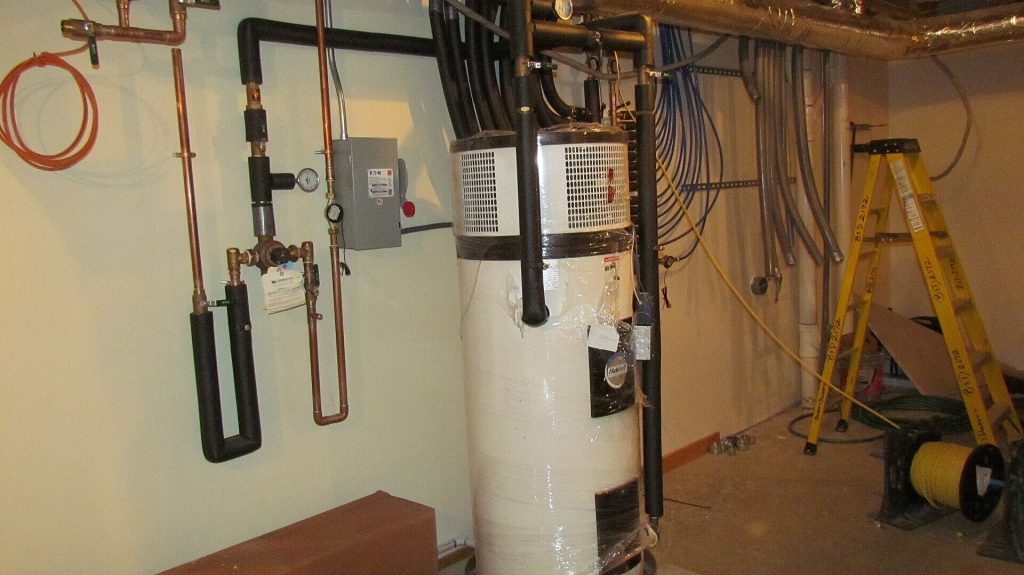
Sources: Solar Victoria – Hot water rebate (updated 12 Oct 2026); Clean Energy Regulator – Deeming period decline; energy.gov.au – Hot water systems; ACT Government – A guide to hot water heat pumps; SA Department for Energy and Mining – Retailer Energy Productivity Scheme. Prices, STC values and rebate rules change often; savings examples use assumed tariffs. Check current eligibility with Solar Victoria, your REPS provider or installer before you buy. Featured image: National Institute of Standards and Technology / Wikimedia Commons, Public domain.