Key points
- South Australia has no minimum feed-in tariff. Retailer rates in 2026 range from below zero to about 8c/kWh, usually capped per day.
- Since July 2025, SA Power Networks charges retailers a small fee for midday exports above a daily free allowance.
- From 1 July 2026, retailers must offer a Solar Sharer plan with free power from 12pm to 3pm, up to 24 kWh a day.
- Using your own solar, or storing it in a battery, is now worth several times more than exporting it.
On sunny afternoons, rooftop solar now supplies almost all of South Australia’s electricity demand. On 31 August 2026 it met 99.9% of the state’s demand. That’s a great achievement, but it also means midday solar exports are worth less than ever. Here’s where feed-in tariffs stand in 2026, and how SA solar owners can get the most from their panels.
What feed-in tariff will I get in SA?
There’s no regulated minimum feed-in tariff in South Australia. Each retailer sets its own rate, and many plans pay a higher rate only on the first part of your daily exports. As of mid-2026, typical offers looked like this:
| Retailer | Feed-in range (c/kWh) | Notes |
|---|---|---|
| EnergyAustralia | 3 – 8 | 8c on the first 12 kWh a day |
| Origin | 2 – 8 | Higher rate capped at 14 kWh a day |
| ENGIE | 1 – 8 | Higher rate capped at 8 kWh a day |
| AGL | 0 – 8 | Depends on plan |
| Alinta | 0 – 5 | Depends on plan |
| Red Energy | 2 | |
| Amber, Sumo, Nectr | 0 | Amber’s export price follows the wholesale market |
Rates change often, so always check the current plan details. If your system was installed before 30 September 2011, you may still get the legacy 44c distributor feed-in tariff, which ends on 30 June 2028.
SA Power Networks’ export charge
From 1 July 2025, SA Power Networks introduced a two-way network tariff. Retailers pay 1c/kWh for solar exported between 10am and 4pm above a daily free allowance (around 9 kWh) for systems with inverters up to 30 kW. How, or whether, your retailer passes this on depends on your plan. Most households export little enough that the impact is small, but it’s another reason to use more of your solar at home.
Solar Sharer: free power in the middle of the day
From 1 July 2026, retailers in South Australia with more than 1,000 customers must offer a Solar Sharer plan. It gives free electricity from 12pm to 3pm every day, up to 24 kWh a day. You need a smart meter, and you have to opt in.
Solar Sharer can work well for homes with a battery, EV, pool pump or heat pump hot water that can run in the free window. Check the rest of the plan too, including the evening peak rate, supply charge and feed-in rate, before you switch.
What’s happening to electricity prices?
- The 2026–27 Default Market Offer for SA rose about 1.4% for residential flat-rate customers, the only region in Australia where it went up. Time-of-use customers saw a 1.1% fall.
- From 1 July 2026, the state’s new Firm Energy Reliability Mechanism adds about $23 a year to the average household bill to fund grid batteries and back-up generation.
- SA Power Networks’ network tariffs now treat 10am–4pm as the cheap “solar window”, with peak pricing in the morning and evening.
How to get the most from your solar in 2026
- Shift your usage to the middle of the day. Run the dishwasher, washing machine, pool pump and hot water on timers.
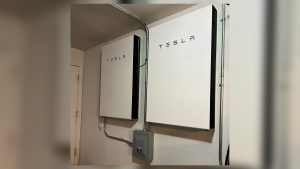
- Add a battery. Each kWh you store and use in the evening saves you 30c or more, compared with 2–8c for exporting it. The federal battery discount is at its highest until 31 December 2026. See how much you could save.
- Review your plan. Compare feed-in rates, time-of-use windows and Solar Sharer offers at least once a year.
- Consider flexible exports. If you do export, a flexible export connection can let you send up to 10 kW per phase when the grid has room. Learn how it works.
Sources: SolarCalculator – SA feed-in tariffs (Jul 2026); AER – Final Default Market Offer 2026–27 (26 May 2026); SolarQuotes – Solar Sharer explained (9 Jun 2026); ABC News – New energy scheme adds to power prices (19 Jul 2026); pv magazine – Rooftop solar meets 99.9% of SA demand (2 Sep 2026). Retail rates are indicative and change often. Featured image: Yu Chu Chin / Wikimedia Commons, CC BY-SA 4.0.